

Soul Train
The Cathedral of Joy

Let’s be real from the git: I fucking loved Soul Train. Not passively, not ironically, not in that Instagram-nostalgia kind of way that gets recycled into Target commercials and TikTok trends. I loved it like someone who’d found the last bonfire in a freezing world. I loved it deeply, in a way that bypassed logic and ancestry and landed directly in the rhythm center of my soul.
And I say this knowing there’s a trapdoor beneath my admission. I can hear the cultural reckoning sirens in the distance, ready to interrogate the whiteness in my worship of something so Black, so proudly rooted in a culture I wasn’t born into. Questlove, D’Angelo, Cornell West and Ta Nehasi Coates, —men whose bloodlines are carved from the struggle and the sublime—they own Soul Train in a way I never could. Their grandparents weren’t allowed to dance freely. Mine were dodging pogroms in Poland, then vaporized in smoke above a camp. So who gets to own anything?
Let’s complicate it further: I’m not the heir of the American plantation class. I’m the descendant of Eastern European Jews who were hunted and scattered. The Polish and Austrian branches of my family? Vanished. Liquidated. The remnants fled to Ukraine, England, Brooklyn. I exist because someone outran genocide, not because someone profited from it.
Still, I understand the unease. Soul Train was a Black cultural cathedral built during a time when joy was a rebellion and music was armor. It didn’t need white worshippers. It wasn’t asking for my applause. But I gave it anyway, reverent and raw.
PIR—Philadelphia International Records—that was my holy ground. Those horns. Those strings. Gamble and Huff engineering symphonic funk so full-bodied it should’ve come with a warning label. And the dancers—my God. For a teenage white boy marooned in a Brooklyn lumber yard of family collapse and spiritual malnutrition, they were avatars of a life I didn’t know I was missing. Beautiful Black women with joy carved into their hips. I didn’t even have the language for racism back then, or if I did, it was buried under kick drums and basslines. What I did know was that something ancient and right was waking up inside me whenever the music hit. Like hearing your real name for the first time.
So I joined a band. Multiracial. Born from that Soul Train DNA. My ticket to a tribe. I wasn’t on the soccer team. I wasn’t at synagogue. I wasn’t debating in some Ivy-feeder club. I was surviving my childhood like a soldier survives a minefield—no map, no medal, just forward. The music didn’t just entertain me. It recognized me. Made space for me. Said: “You’re not insane. You just need a pocket and a groove.”
And yeah, I was aware enough not to cosplay Blackness. I wasn’t a “wigger”—that tragic, cringe-fest identity meltdown where a white kid slips into a dialect not his own and calls it authenticity. I loved Black culture without trying to be Black. I still loved The British Invasion and Blood Sweat and Tears. I wasn’t blind to my own skin. But I also wasn’t letting it be a border wall.
Even now, 10 seconds of “Where Are All My Friends” on Soul Train shatters me. That song wasn’t just a lament—it was scripture. It said: be humble. Stay grounded. Don’t get too big for your bell bottoms or the universe will correct you. There’s theology in that funk. A black mother’s warning nested inside a Cadillac dream. It’s both elegy and farce. Soul and satire. Black Jesus in a velvet suit.
So here’s my CTA—my call to the soul-tribe:
Did you watch Soul Train?
Did it save you too?
Did Philadelphia International Records make you cry and not know why?
Because when I was 15, waiting for the show to come on, I wasn’t just tuning into a dance party. I was looking for proof that joy was still an option. That community could be synthesized, even if just for a few minutes, through a groove.
And now my son is fifteen. Neck-deep in the molasses of adolescence, thrashing around like it’s quicksand.
ADHD. Social collapse. The pixelated opioid of the Internet has its claws in him. The result, perhaps, of parenting a teen; his mother’s occasional unraveling threatens to make our home appear to him less of a harbor and more of a storm drain. And I stand here, not perfect, not rich, not always calm—but trying to stay steady. Kneeling on this dock I built from memory and drumbeats, yelling: Swim, son. Swim. I’m right here. I’ve been where you are.
Maybe I didn’t build him a mansion, but I built him this: presence. The same presence Soul Train gave me. That feeling of not being alone. Of being pulled into the light, just for a moment, by people who knew pain but danced anyway.
So no, I haven’t scratched the surface of what Soul Train meant to me. I’ve only brushed the dust off the tombstone of a boy who needed love and found it in polyester and bass.
This is not an essay. This is an invocation.
Love, Peace, and Soooooooooooooooooul.
Is anybody listening? Does anyone hear me? Did you ever feel alone? Did you watch Soul Train too?
Anyone?
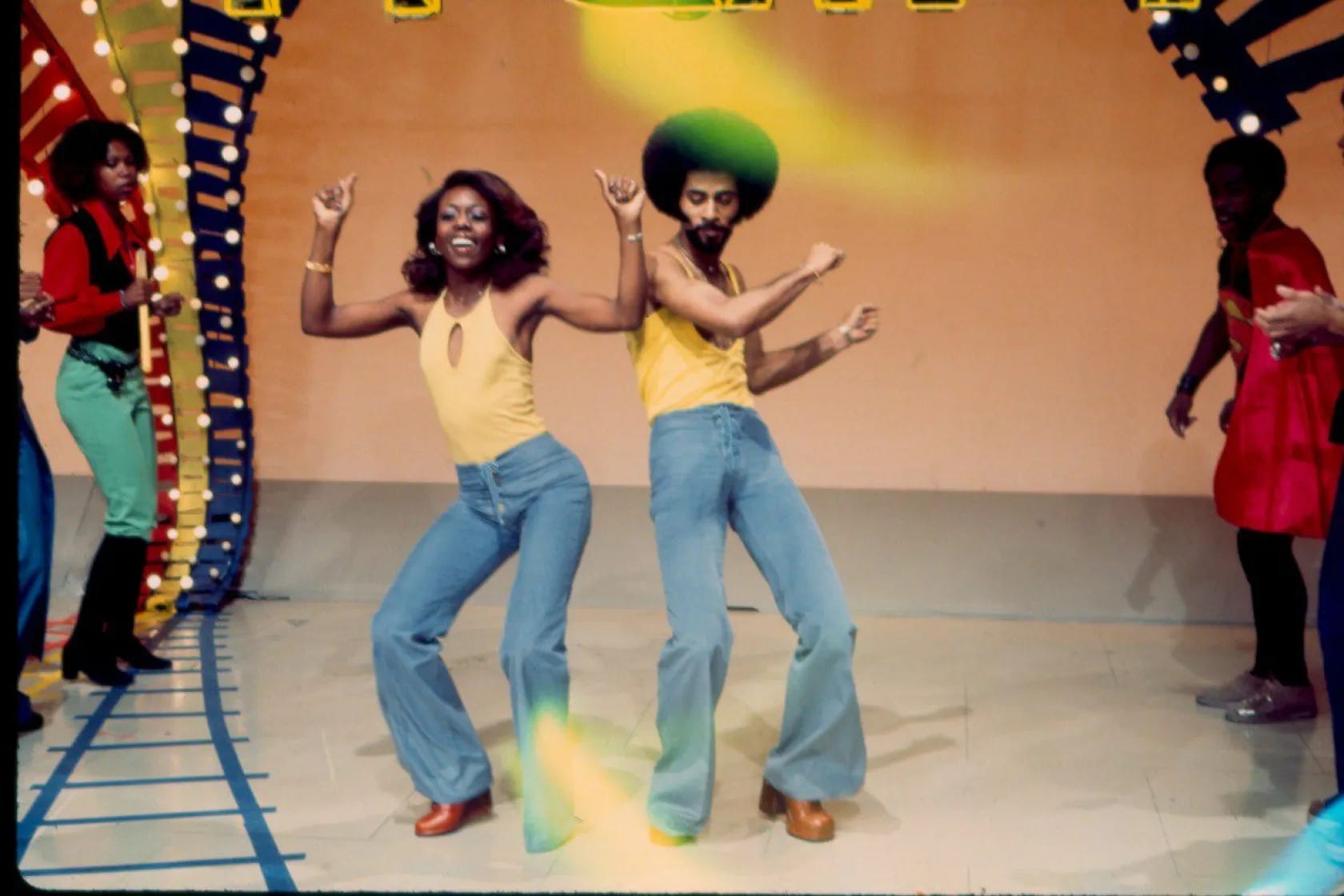
Soul Train music was on the fringe of top 40, many times you'd hear the song here first. Same for the clothes you'd be wearing those clothes....a year later. I was never going to dance like that, so wouldn't even try. Loved the animated train opening. It was American Bandstand with attitude and vibe. The best.
I loved Soul Train but maybe being only a couple of years older than you it kind of already existed in my world before I actually saw it so it didn’t have that impact. But you touched on something again emanating from Lee Williams. That’s a longer story of course.