

Mike
The Version of Ourselves We Carry Forward

There are days when the world feels like a long hallway lit by flickering fluorescent tubes: functional, harsh, and just bright enough to show you what you’re missing.
And then, without warning, someone does something so unusually decent, so calmly brave, so deeply human, that the light changes.
Not because the facts change.
Because you do.
You feel it in the body first. The chest loosens. The jaw unclenches. Cynicism, usually so reliable, goes briefly offline. And in that temporary outage something almost embarrassing slips through: hope. Not the bumper-sticker kind. The kind that opens a window in a sealed room.
Psychologists call it moral elevation. A fancy name for a simple shock: you witness kindness or courage so clean it rearranges your sense of what people are capable of. Which is another way of saying it rearranges your sense of what you might become.
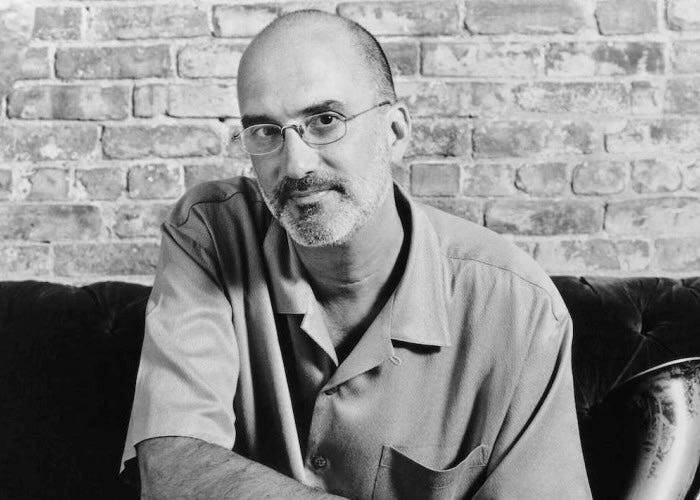
For me, that person was Michael Brecker.
And the part that matters most is not that he was a force of nature musically, though he was. It’s that he was the gentlest man I ever knew.
If you want the standard origin story of a great musician, it’s easy to sketch. Childhood competitiveness. The hunger for approval from parents and siblings. A young mind trying to win love by becoming impressive. Then, later, the teenage stick your finger-in-the-socket encounter with John Coltrane that rewires so many young musician’s DNA—and makes ordinary reality seem a little too slow.
That kind of biography flatters our craving for cause-and-effect.
But Mike’s real gift wasn’t just what he could play.
It was how he treated people.
He was famous enough that musicians approached him constantly, which creates its own strange ecosystem: talented people, insecure people, mediocre players, desperate people trying not to look desperate. And he met them all with the same thing.
Encouragement.
Many of you who knew Mike know exactly what I am talking about. No hierarchy. No judgment. No subtle cruelty dressed up as “honesty.” Just humility and a kind of spiritual spaciousness that made you feel, even briefly, like you could exhale.
It sounds simple. It isn’t.
When I say he saved my life, I don’t mean it in the dramatic, made-for-TV way. I mean he rescued my understanding of myself.
He did it with presence. He noticed you, not just your résumé or your public identity, but the bruised, complicated person underneath. The person trying to stay intact.
I can still hear him, after something I played, or wrote, or something I tried, or something I barely survived.
“Gah! You’re amazing! How did you do that?”
It’s such a small sentence. It doesn’t sound like a miracle.
It is.
Because the sentence wasn’t about flattery. It was about belonging. It was a slight of hand. It was his way of saying: I see you. You’re in the circle. You don’t have to audition for your humanity.
We were friends for thirty years. We made a lot of music together. His career had so much momentum and a place for me “on the gig” never appeared.
Until his final record.
We were working long hours, deep in it, and he looked at me with that same astonished warmth, like the world was still capable of surprising him, and he said:
“Gah! You’re the producer!”
And just like that, I belonged.
That moment still supports me. Literally, not poetically. It interrupts the daily noise. The cultural instruction that everything valuable must be monetized, optimized, and posted like a trophy.
Today I took a deep dive into the great jazz pianist Bill Evans. The nuance. The erudition. The purity of improvisation. The beauty of it.
The art of it.
And I realized that what I miss in Mike isn’t only the man. It’s the atmosphere he created around meaning. He was a quiet rebuke to the great American confusion that thinks building a ballroom and making something beautiful belong in the same category of accomplishment.
One is square footage.
The other is humanism.
That’s the real point of moral elevation, if you keep tracing the thread. It isn’t just admiration. It’s an invitation. A glimpse of what humans are capable of when they’re not busy posturing, defending, selling. It reminds you life is not only transactions. There are forms of generosity that don’t seek applause. There are ways to be great without making other people feel small.
I’ll admit something I don’t love admitting: it’s been harder to conjure those qualities without him. The world gets loud. The culture gets mean. Your own mind can become an unfriendly neighborhood.
I continue to grieve him, the man I considered my best friend and savior.
And of course I’m not the only one.
Sometimes I think that’s the truest measure of a person. Not what they achieved, not how many people knew their name, not even how expertly they mastered their craft, though Mike mastered his. The measure is how many people felt more human in their presence. How many people were pulled back from the ledge by a look, a sentence, a kind welcome.
We don’t just lose people when they die.
We lose a version of ourselves that they made possible.
But moral elevation keeps offering a second truth, quiet as a note folded small in your pocket:
If someone once cracked open your imagination of who you can be, the crack doesn’t fully close.
If someone once welcomed you back inside, you can learn, slowly and imperfectly, to welcome yourself. And you can do for others what they did for you.
Maybe that’s what finding our possible selves really means. Not self-improvement as a project plan. Something older. Remembrance. Apprenticeship. Carrying forward the goodness you witnessed until it becomes something you can offer.
I miss him. I miss him in a way that still knocks the wind out of me.
But I also love him, and I carry him forward. We all do.
And some days, when the world is overwhelming and fluorescent again — and the hallway seems long, I hear his voice anyway:
“Garywan! You’re amazing!”
Keep at it.
You continue to be very provocative. And not in a political way in a holding a mirror up to yourself way. I knew a guy like that. An incredibly smart guy who acted like everyone had something to offer. Empowering people.
beautiful tribute, gary!