

I Never Saw Jimi Hendrix
I Was Born Nine Months Late For The Band of Gypsys

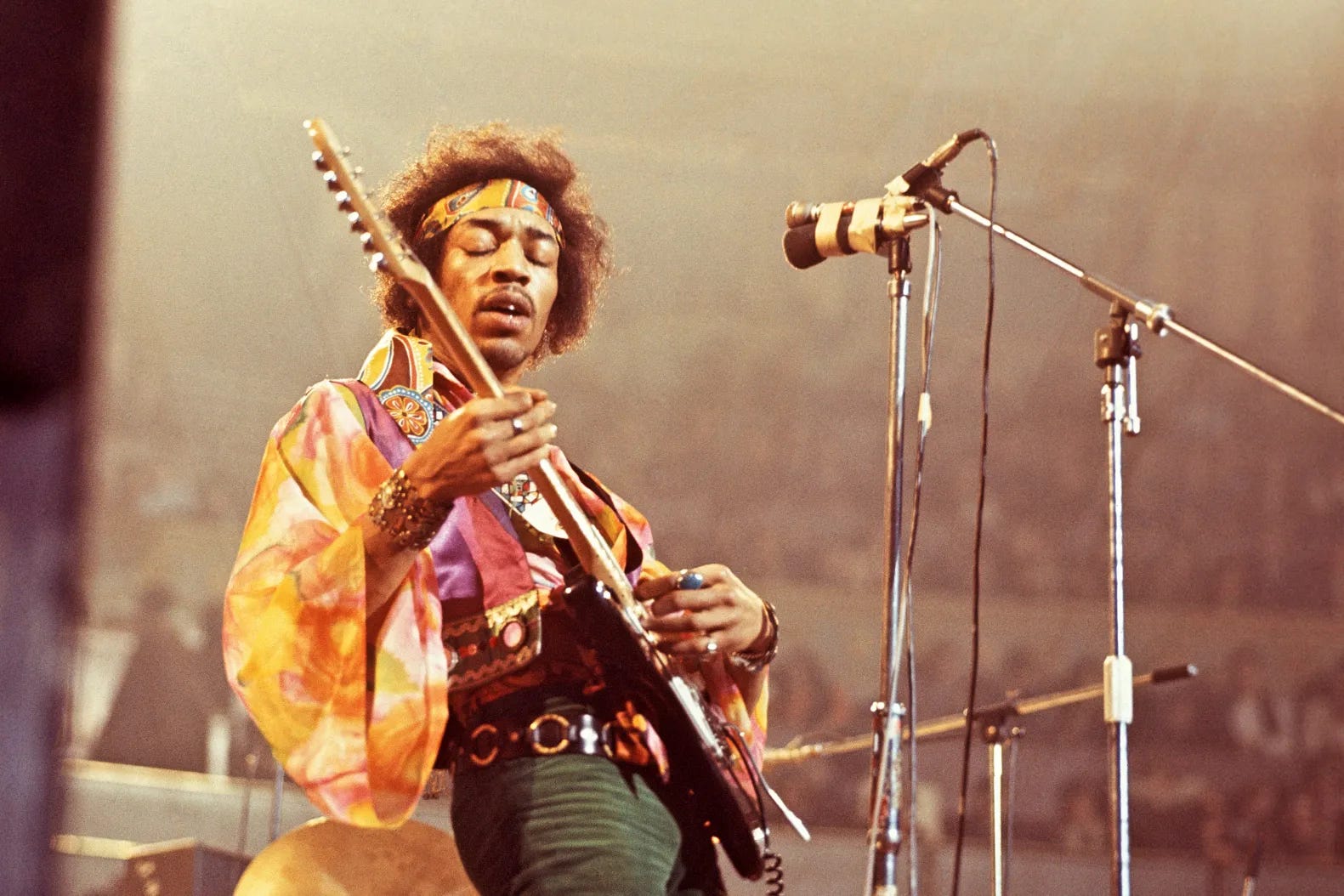
On August 23, 1967, I was a few months over ten years old.
That was the day Are You Experienced came out in the United States.
I didn’t hear it that day. Of course I didn’t. Ten-year-olds don’t get the memo when a culture detonates. Culture detonates somewhere else, then the smoke wanders into your suburban New York neighborhood when it feels like it.
For me it wandered in a couple months later actually. Probably October. The first time I heard it was at my best friend Billy Baum’s house, because Bill had what every kid needs but doesn’t know to ask for: an older brother.
Andy Baum was two years ahead of us, which in kid-time is basically a doctorate. Andy was always ahead of us. It was as if he had a passport the rest of us weren’t old enough to carry. He turned us on to The Band’s invention of Americana and then the sea change: The Jimi Hendrix Experience, and when I say “turned us on,” I mean he cracked open a trapdoor in the universe and casually pointed down like, “Oh, by the way, there’s this.”
At ten, I was instantly hooked on “The Wind Cries Mary” and “Hey Joe,” the way some kids get hooked on comic books or baseball cards or shoplifting gum. I didn’t just like those songs. I moved into them. I arranged my internal weather around them.
The next Jimi chapter was Axis: Bold as Love. Technically it came out January 15, 1968, and by this time, it was only days after that I got the record, which matters because my whole childhood is a ledger of exactly when the lightning struck.
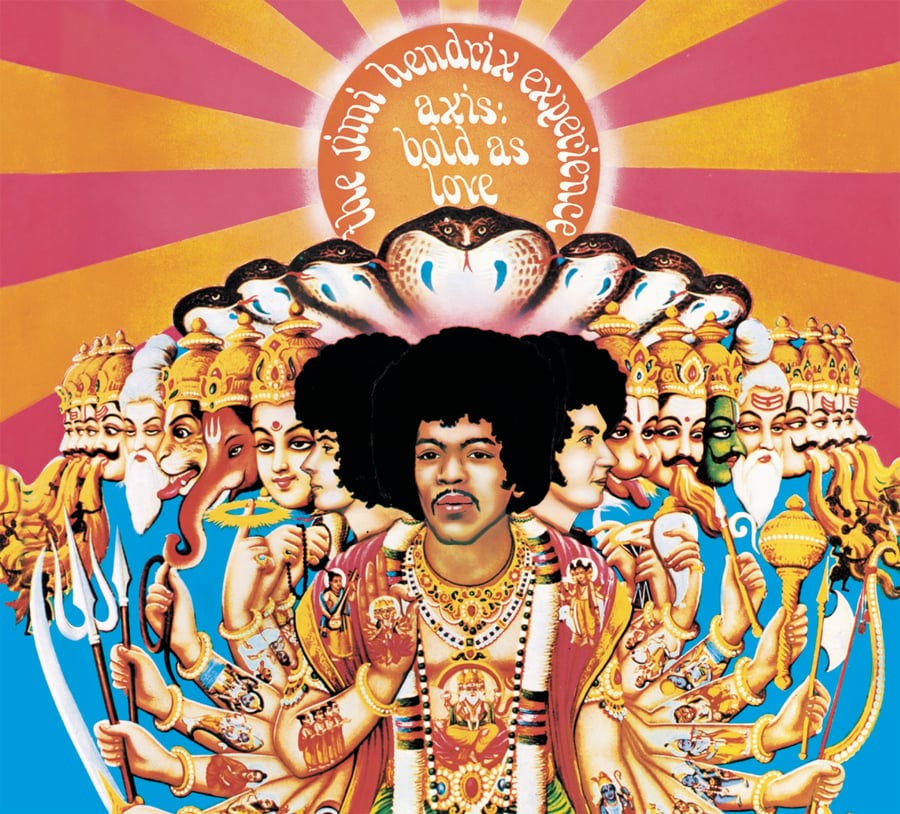
Axis blew my mind so cleanly it felt like I’d gotten brain surgery. Two years later I’d take acid and listen to Axis start to finish, which sounds like a cliché now, but back then it was a simple prophecy fulfilling itself. The record didn’t just predict the trip; it invented the climate the trip needed.
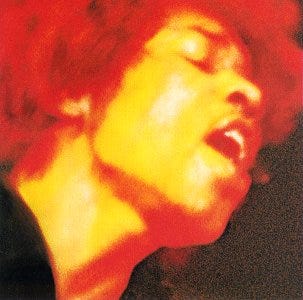
Next came Electric Ladyland, released October 16, 1968 in the U.S., and by then my room had become a kind of temple-slash-bunker. I’d moved down to the basement to live with my silver sparkle drum set like some small, pale monk who’d chosen a vow of volume.
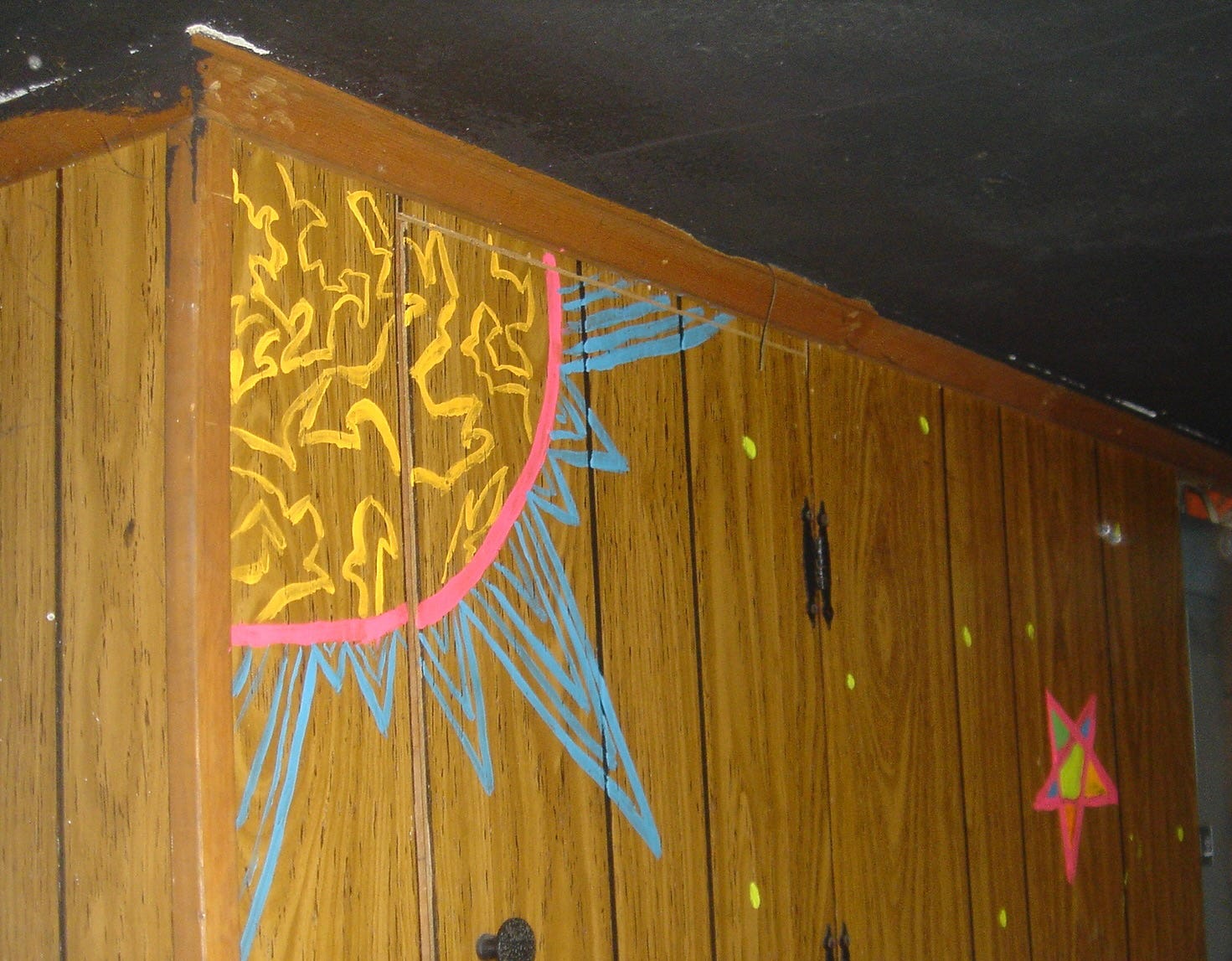
The OG teen cave. One wall was hand painted day-glo stars and planets. The ceiling painted black. Another was covered floor to ceiling with Hendrix posters. There was a waterbed. Candles. Incense. A great stereo… Fisher amp, Garrard turntable, JBL speakers stationed like bouncers on either side of the waterbed. They were loud enough to make you think you were at a live Jimi concert.
I would blast “Voodoo Child” and then, because I was twelve and imagination is a legal hallucinogen, I’d screw in a red light bulb and pretend I was in a nightclub, live-in-the-studio, a simulation of a simulation of a place I wasn’t old enough to enter.
Jimi Hendrix was everything to me. Not “inspired me,” not “I was a fan,” not “I respected the artistry.” No. He was mine in the way kids claim things they can’t possibly own: a stray cat, a secret fort, a song that feels like it’s been written in your handwriting.
I had a deeply personal relationship with every track. I knew their moods. Their corners. Their traps. Every nuance. Nobody could take that away from me. My friends knew I was the resident Hendrix freak. It wasn’t a phase; it was my citizenship.
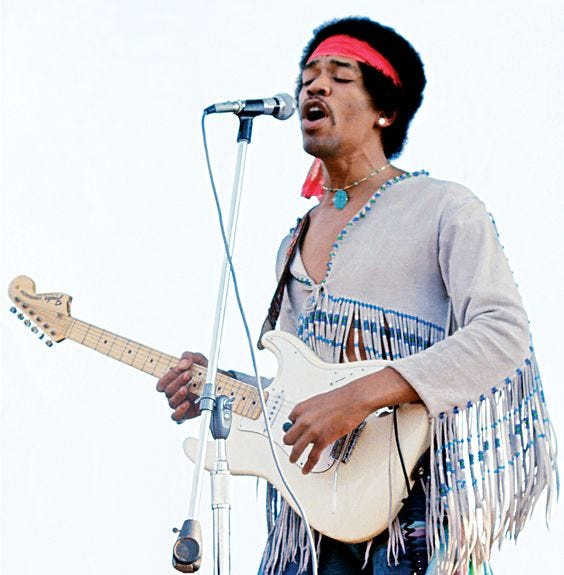
And then on September 18, 1970, the inevitable happened.
My pal “Noodles” Nudelman called. I picked up the phone in the kitchen. The phone was yellow. I remember it like it was a prop in a play. I remember the shape of the receiver, the extra long corkscrew cord, the strange modernity of it; it was that first generation where the dial moved into the handle like the future had gotten lazy.
Noodles said Jimi Hendrix had died.
I was thirteen.
Crushed, but not in a dramatic teen-movie way. More like: a load-bearing beam in the house of your inner life just quietly snaps, and suddenly the roof is learning new physics.
I never saw Jimi Hendrix.
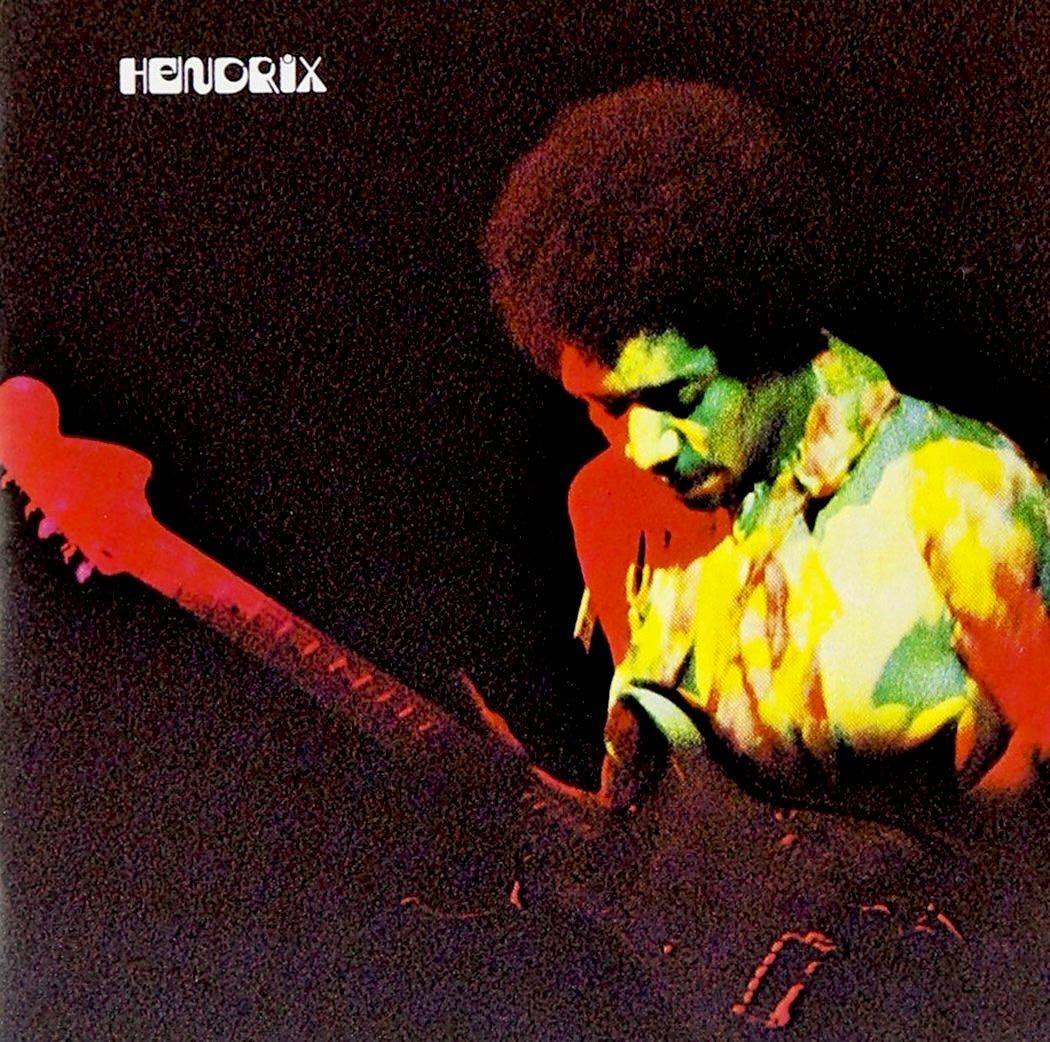
He’d played the Fillmore East about nine months earlier. Band of Gypsys, wherein the first note of the solo of “Machine Gun,” which I to this day contend is the single greatest note ever played, occurred. New Year’s Eve 1969. I didn’t go. I was thirteen and not yet allowed to go into the city by myself.
But the night after Jimi died, my parents let me take the train into the city by myself for the first time… to see Led Zeppelin at Madison Square Garden. The Garden was just above the LIRR Penn Station so you didn’t even have to leave the building. Up the escalator and into the concert.
That year I started going to the Fillmore East, almost weekly, like a pilgrim who finally discovered the road to the shrine.
Six months too late. Just late enough to haunt you.
Before all of this, or alongside it, or threaded through it, I was also tied to Sly, to The Who, the movie of Woodstock and by now a hundred other bands I had seen at the Fillmore.
But Hendrix was different. Hendrix wasn’t “music I liked.” Hendrix was my safety. My escape hatch. My entrance into the spirit world.
I came from a family and culture with no religion.
No spiritual ground. No mythology. Totally free-floating. Not in a glamorous, existentialist way but more in a FM-radio/pop-culture-with-no-road-map kind of way.
When Hendrix showed up, he handed me a flashlight and said, without words:
Welcome to the underworld. Here’s where the truth lives.
And because I was a drummer, it went deeper.
Mitch Mitchell, the drummer for The Experience, was everything. I copied his licks, practiced his style, tried to learn that particular kind of controlled chaos, that jazz-brained hurricane trapped inside rock songs. When I turned fourteen, I took the train into New York City to study with Tony Williams, jazz great and drummer for the Miles Davis Quintet. All I could do was rave about Mitch Mitchell this and Mitch Mitchell that, like I was trying to convince the adults the world’s most urgent theology was happening on his ride cymbal.
It’s hard to explain how much Jimi meant to me, and how much the music still affects me now.
There was the acid trip. There was the after-his-death aching release of The Cry of Love. There was that sound, the ride cymbal on “Straight Ahead,” that dry 22-inch Zildjian bite that felt like it had its own opinion about your heartbeat. Someone told me Mitch got that cymbal from Chris Parker, or maybe Chris got that cymbal from Mitch… which is the sort of urban legend you collect when you’re building a shrine: not because it’s useful, but because it’s proof the relic was real.
And I keep thinking about the math of it.
I was eleven, when he was twenty-five. He was only about thirteen years older than me yet he was my shaman.
He died at twenty-seven.
It’s almost comical. It was not until decades later that I would be able to articulate the genius of what he did.
Jimi Hendrix had introduced a kind of theater performance to rock and blues music. An original mashup of wholly disparate energies that could not have occurred at any other time in history.
Psychedelia, drug use, love and personal freedom, teenage rebellion, hippie culture, post-slavery acoustic southern blues, Little Richard-style southern gospel evangelist church, bisexuality, British Shakespearean poetic imagery, the ethics and loving morality of Arthurian grail legends… combined with tremendous power. Volume inducing enough to overwhelm to bring the observer to the point where they experienced the sublime as if they were in the saturation bombings of Dresden. Mix in some primitive goddess mythology with Renaissance cross-dressing and colors, pyrotechnics, circus performance with reckless abandon… “look, I can play upside down, do a somersault and play with my teeth behind my head.”
Add in a loving wink at America… playing the national anthem at a peace and love festival, insert in the bridge an electric version of the shriek and churn of war; the sounds of bombs and machine guns and metal birds over human bodies, and making a perfect left turn away from spectacle and into lament. Hard jump cut to introspection. The bruised quiet where your chest finally admits what you mouth has been refusing to say:
“Wow.”
One had to be there and have lived it to understand. Jimi could never have happened at any other time and his contribution was high art at its pinnacle… the peak of epiphany-inducing breakthrough where the wonder of God makes itself known. For a moment.
It was participation in divinity.
With self-taught virtuosity, he took an upside-down strung Stratocaster and stretched the technology of the day; used highly imaginative stage performance and personified the spiritual using the exact same masks of god used by:
Krishna
Shiva
Buddhas
Christ
Spirits
Gods
He held up a mirror to the truth as did these deities.
The symbolic faces… mythical and metaphorical vehicles of forces that have always existed and are always present in the here and now. Forces that we participate in, each and every moment.
Compassion.
Violence.
Creation.
Destruction.
Love.
Chaos.
So this whole epic love affair, this private mentorship, this spiritual adoption, was between a twenty-something shamanic black young man who didn’t get to become an older man and a pre-teen white kid on Long Island who did. Which leaves me with this bittersweet, joyful and sad feeling. I’m weirdly grateful, like I caught a comet at the only moment it was close enough to singe my eyebrows and then it flickered out into eternity.
Many of us were alive when Duke Ellington and Miles Davis and Stevie Wonder and Sly Stone and Wayne Shorter and Weather Report were still in the same world as my little yellow kitchen phone. Alive for America’s greatest contribution to art, spiritual, sophisticated, devastatingly beautiful, and we know a lot of people barely noticed it while it was happening, like living next door to a miracle and complaining about the parking.
Those artists gave me my life. Or at least they gave me the tools to build one.
And Jimi Hendrix created a whole world.
I never saw Jimi.
But I lived with wonder inside what he made. I still do.
If this essay meant something to you, forward it to one person who loves music and still believes art matters.
What an absolutely brilliant tribute, if I can call it that? I feel it is so much more. It's a thank you, a coming of age, a bar mitzvah, an orgasm, an eye opener, a direction pointer, a savior and so many other things that only you would know. Thank you. Thank You. Thank You
I did get to see him. Singer Bowl August 23 1968. He played with (dig this lineup!) The Soft Machine, Chambers Brothers, Big Brother and the Holding Company ( featuring you know who) and then the master. I went with Brad Heftel, and a bunch of other kids from Hewlett. Drove to Flushjng Meadows in a big convertible. I was straight. No weed no pills no nothing. Just base level consciousness. Hendrix was the drug. His playing shifted and opened new planes of existence. As I watched. Quite simply; inimitable, transcendent, a phenomenon that cannot be explained. A new kind of drug. And I always put Mitch Mitchell up there with Ginger Baker. I never thought he got the acclaim he deserved. The other bands didn’t disappoint either. Chambers Brothers at the height of their game, the remarkable Janis Joplin, and the hard to get Soft Machine. Every act a legend. 56 years later and I can still see that magician opening new doors and stepping thru them with me in tow.