

Hold On To The Good
What is all this?

It started, as these things do now, with a clip in a feed—something that went viral for the most modern of reasons: it was good.
Colbert talking with Ian McKellen. A configuration of celebrity and gravitas where one expects a Hobbit trivia discussion. Then Sir Ian points out what he knows to be true: that there is always Shakespeare in it. In everything. In sending ICE into Minneapolis and Stephen Miller, churning up some hate for “strangers” (which leads directly to the most annoying combination of all), in undifferentiated disdain for others. In things you can’t dismiss as fluff, and you can’t pretend do not hurt.
And then, like the universe saw me bewitched by my phone—and decided I needed consequences, my feed started serving me the preeminent interpreters: McKellen. Judi Dench. Knighted, sanctified as People Who Can Say These Words Without Sounding Like They’re Wearing a Curtain.

I’ve never really been able to memorize any Shakespeare. I’ve always wanted to. The way you “always want” to run a marathon, or learn to speak another language fluently. It’s aspiration as décor. Shakespeare has always lived in the category of Things I Respect From a Safe Distance.
Memorization, in particular, has never been my thing. I’ve always wanted to memorize a sonnet the way some men do, with the suspicion that doing so might make them appear more real and present. I remember my dear AK memorizing one, thinking it would get him laid, but it turned out that his boldly singing “It Must Be Him” by Vicki Carr got better results.
Meanwhile, in the real world, I’ve been taking my son to his Nashville School of the Arts choice program, because he wanted theatre.
And film.
That part made me smug, briefly, in the way fathers get smug about the one area where they believe they have transferable wisdom. I spent years trying to share what I knew about film with him. I handed him the classics like they were heirlooms: 2001: A Space Odyssey. Apocalypse Now. Taxi Driver. Alien. This was me doing fatherhood the only way I reliably know how: here, take this art, it survived me, maybe it can help you survive you.
He watched them. He absorbed them. He filed them away inside whatever mysterious library he has in his head.
And then he did the thing children do when you’ve built them a little bridge: they walk across it and keep going, without you.
He got bumped up from a small part to the lead role in his school play. He’s fifteen and he’s mildly neurodivergent, which is both the least surprising and most life-defining fact in our household, and also not mine to explain in public with any specificity. I’ll just say this: raising him has had some challenges along the way... The kind that don’t photograph well. The kind that don’t fit into the neat little inspirational captions people use when they want to be admired for loving someone they were already going to love.
I have always worried terribly.
Will he be able to launch?
Will he be able to sustain?
Will he be okay when the world stops being a controlled environment with teachers and schedules and adults who pretend patience is infinite?
Admittedly, there have been more than a few challenges with me in particular. My marriage. Mental health. Money. Stability. This world. The house falling into disrepair, the way a house does when entropy chimes in and the people inside are trying to keep their own beams from cracking.
I have been waiting for relief the way people wait for a delayed flight: staring at the board, bargaining with the air, thinking surely the announcement is coming any second.
And then, in the middle of this, my son started speaking Shakespeare.
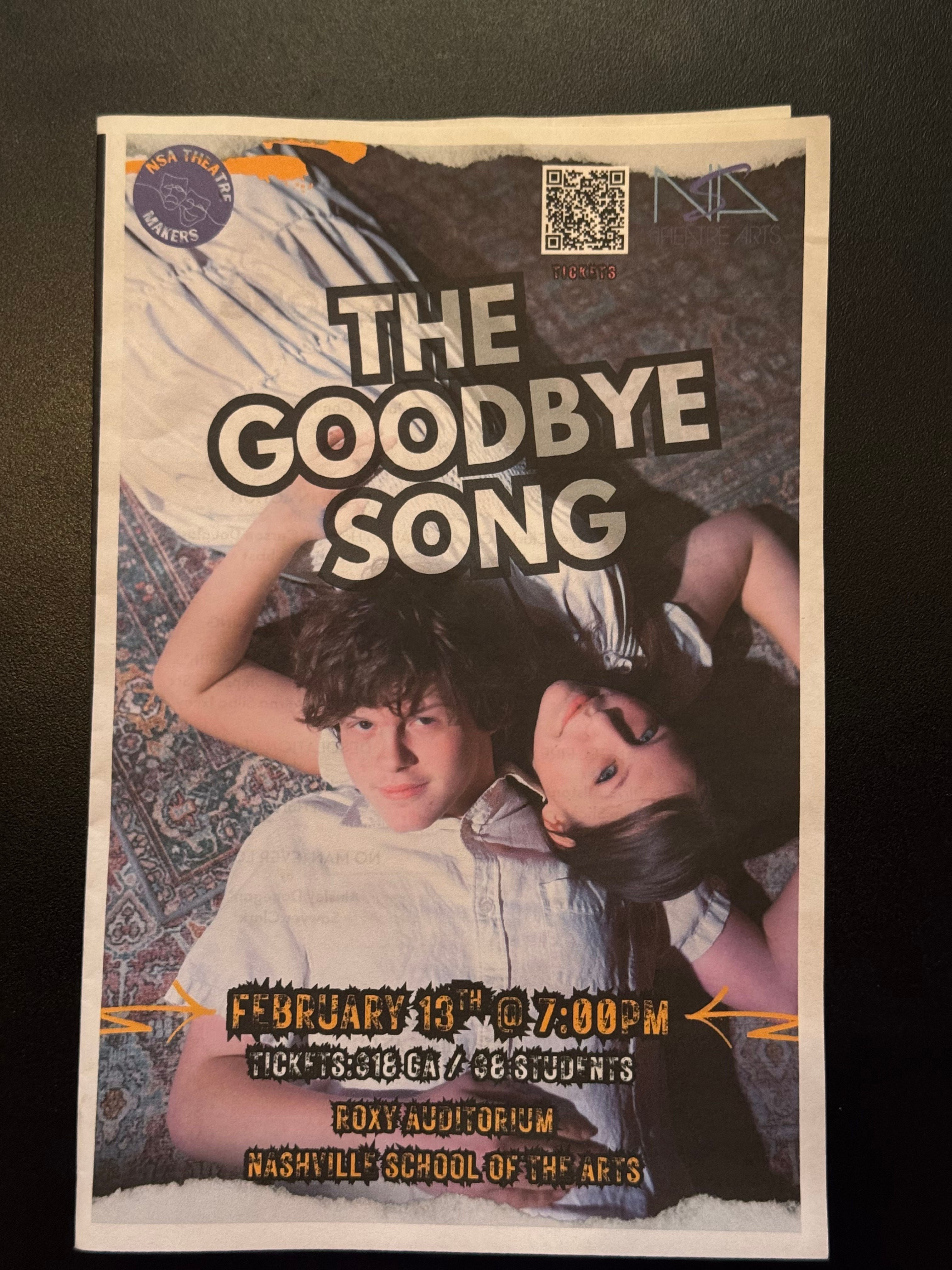
I went by myself to see his school play—the performance with the full audience. Real people. Full production in a theater where laughter lands and silence has weight.
And it turned out my son was the lead.
And he was… speaking Shakespeare. Not in a “cute kid recites a thing” way. In a deep, blood-soaked, rich way. In a way that made the room behave differently. In a way that made time pause for the length of a line.
His dialogue was complicated, and therein he had memorized five sonnets.
Five.
I can’t memorize where I put the Costco receipt that I need to get out of the store, and this kid is out here carrying Shakespeare in his chest like it’s a second heartbeat.
He made people laugh.
He made people cry.
He was a force.
Now I need to say something here, because I can’t stand a certain kind of parental storytelling. You know the kind. The kind where a person turns their child into a glittering trophy and then polishes it in front of you until you’re smiling along but are blind and disgusted. The kind where the parent’s awe becomes a performance. The kind where you can feel the kid must be shrinking inside the praise like a turtle being forced out of its shell.
“Isn’t it amazing? We’re so proud of him.”
I don’t want to do that.
I’m not trying to sell you on my son as an object of wonder.
I’m trying to describe the moment I realized I was in the presence of something I didn’t expect, and how it rearranged me. Because the big thing wasn’t that he was good.
The big thing was that he wasn’t my little boy anymore.
The night before the play, and then again in the performance, he showed me something clean and brutal:
My boy is gone.
Not gone in the way we fear when we’re up late scrolling through worst-case scenarios. Not gone to death. Not gone to tragedy.
Gone to time.
Gone to becoming.
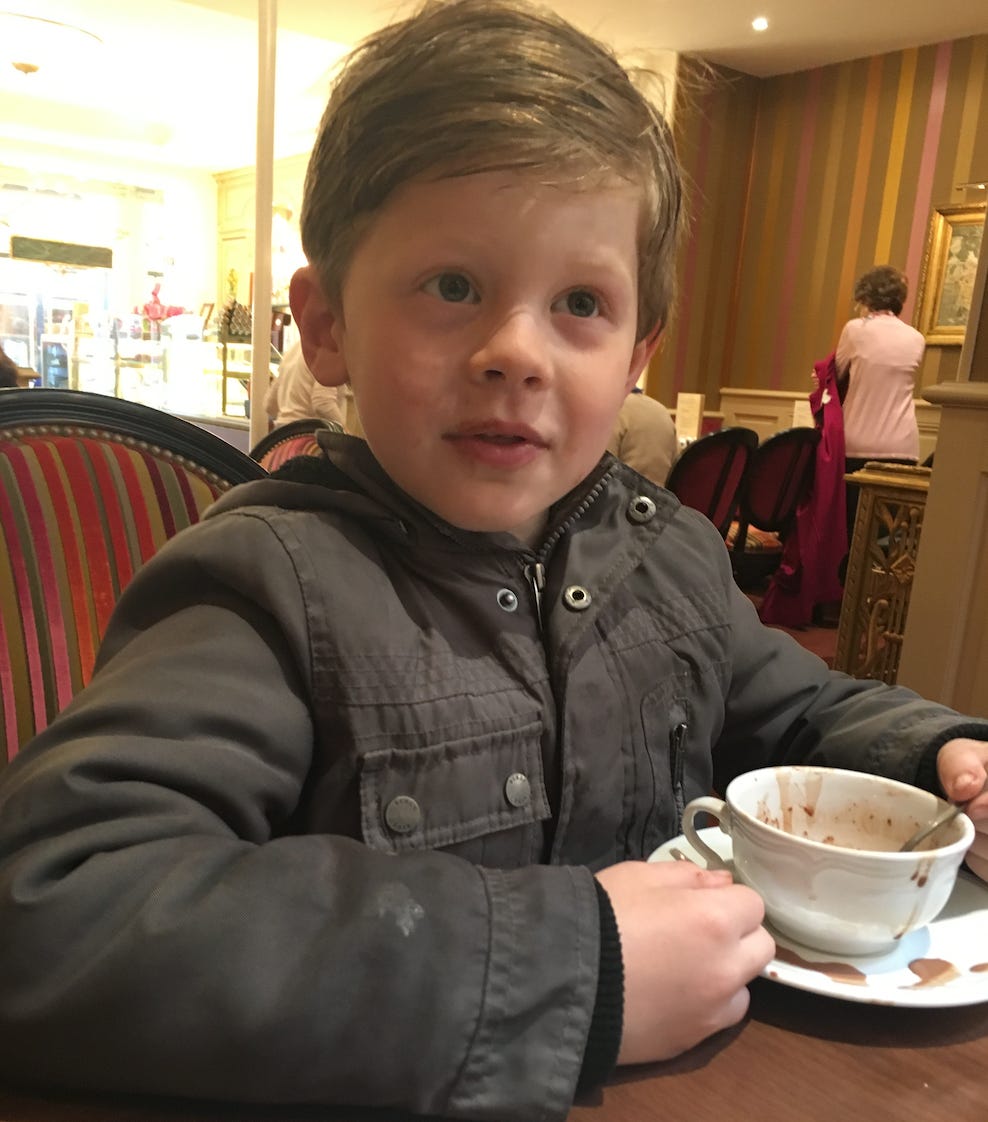
Gone the way an eleven-year-old disappears when a fifteen-year-old arrives, wearing the same face but inhabited by a different person.
And here’s where Shakespeare walked in and sat down at the kitchen table like he owns the fucking place.
Because last weekend my son said, casually, like it was nothing, “Hey Dad, there’s a high school film club. I got an invitation to go watch Hamnet at the Belcourt. You wanna go on Saturday?”
Hamnet.
The name hit my ear like a bell, even before I knew what it would do to me.
I said sure. What else was I gonna say? I said it with that easy optimism of a parent who’s learned to expect logistical chaos. Of course, I assumed we wouldn’t make it on time. I assumed, frankly, we wouldn’t make it at all. Appointments are not his strong suit. Time behaves strangely for him. He’s always a few minutes late to everything, not out of disrespect, but because his internal clock is tuned to a station no one else can pick up.
And yet he has superpowers.
Always has.
So we went.
We walked in two or three minutes after the start. Which, in our life, is essentially punctuality.
And I cried.
Three times.
The biggest part wasn’t even about the film’s craft, though it was beautiful. It was about the story landing in me like a stone.
Hamnet is about Shakespeare losing his son. And not just losing him to death, though that’s the headline. It’s about that specific horror of not knowing where your child’s gone, of feeling a presence become absence.
And sitting there heaving, next to my fifteen-year-old son, in a dark Nashville theatre; I felt an obscene and exact parallel:
Shakespeare didn’t know where his boy had gone.
I don’t know where my boy has gone either.
My boy didn’t die. My boy turned into a man.
That’s the grief nobody warns you about because it sounds like a humblebrag if you say it out loud. Oh no, my child is growing up, poor me. But it is grief. It is a clean kind of mourning. You are losing someone you love to the exact thing you’ve been working for since the day they were born.
You spend years building a runway.
And then one day the plane lifts.
And you’re proud.
And you’re devastated.
Art, of course, is where we go with that kind of grief. That’s the oldest trick humans have. We take the unbearable and we give it a shape we can stare at. We take the formless panic and we make it a story, a song, a play, a film. We pretend we’re “processing” because “processing” sounds like something you can complete and file away.
I obviously don’t want to compare myself to Shakespeare. Shakespeare was plugged into something higher. He wrote like the gods were dictating and he was just trying to keep up.
But I’ve had my own version of that hunger. My obsession with mythology and symbols. With Jung and Joseph Campbell. With spiritual frameworks. With recovery language. With music. With writing. With the idea that story is not decoration but survival.
And then there’s money.
Shakespeare made bank. Shakespeare became a rock star. The Globe, the crowds, the legacy that turned him into a brand before branding was even a thing.
Me, I’ve got my studio. My writing. Substack subscribers. The records I’ve made until I stopped finishing or releasing them. Great command of a musical instrument. A life where the creative impulse is relentless but the monetization of it feels like trying to trap fog in a jar.
And it’s all happening at once.
In the same week, I’m dealing with medical news I didn’t ask for. The kind that turns every other sentence in your life into background noise.
And now, somehow, I’m on a jag about Shakespeare while my life is doing that thing it does when it wants to test your limits: everything at once, stacked like plates in a diner waiter’s hands, wobbling, daring you to make it across the room.
So here I am.
Trying to get my writing to a place where it generates income.
Trying to keep my family upright.
Trying to accept that my son is becoming someone I don’t fully know yet, which is both the goal and the heartbreak.
Trying to believe that art still matters when your body is under threat and your mind is tired and your house needs repairs and your past keeps tapping you on the shoulder like a sleazy credit agency.
And Shakespeare, of all people, is the one holding up a mirror.
Not because I’m him. Not because my suffering is epic. Not because my life is a tragedy in iambic pentameter.
But because he understood the central insult of being human:
You will love. You will lose.
You will make something out of it, or you will drown.
And you won’t get to choose the order in which it happens.
It will arrive in a strange sequence.
Mysteriously and without your knowing it.
It will begin with something stupid, like a viral clip about Gandolf and ICE.
And then your kid will speak a line that makes the room go quiet.
And then you will sit next to him in the dark, watching a story about a boy gone missing, and realize you’ve been living your own version of that story for years.
But not missing in the dramatic way.
Gone missing in the most ordinary way.
The way time steals people.
Jesus.
What is all this?
It’s life, I guess.
And it’s art, doing what it always does when we’re not looking:
Taking the unbearable, and making it sing.
Sir Ian McKellen “The strangers should be removed!”

When, in disgrace with fortune and men’s eyes,
I all alone beweep my outcast state,
And trouble deaf heaven with my bootless cries,
And look upon myself and curse my fate,
Wishing me like to one more rich in hope,
Featured like him, like him with friends possessed,
Desiring this man’s art and that man’s scope,
With what I most enjoy contented least;
Yet in these thoughts myself almost despising,
Haply I think on thee, and then my state,
(Like to the lark at break of day arising
From sullen earth) sings hymns at heaven’s gate;
For thy sweet love remembered such wealth brings
That then I scorn to change my state with kings.
Wonderful. Keep going.
Just wonderful Gary - deeper than it had to be - thank you!