

Elvin
There's Only One

I went down the stairs to the Village Vanguard the way you go down the stairs to any holy place that also sells drinks: half in reverence, half in disbelief that the world allows such a thing to exist.
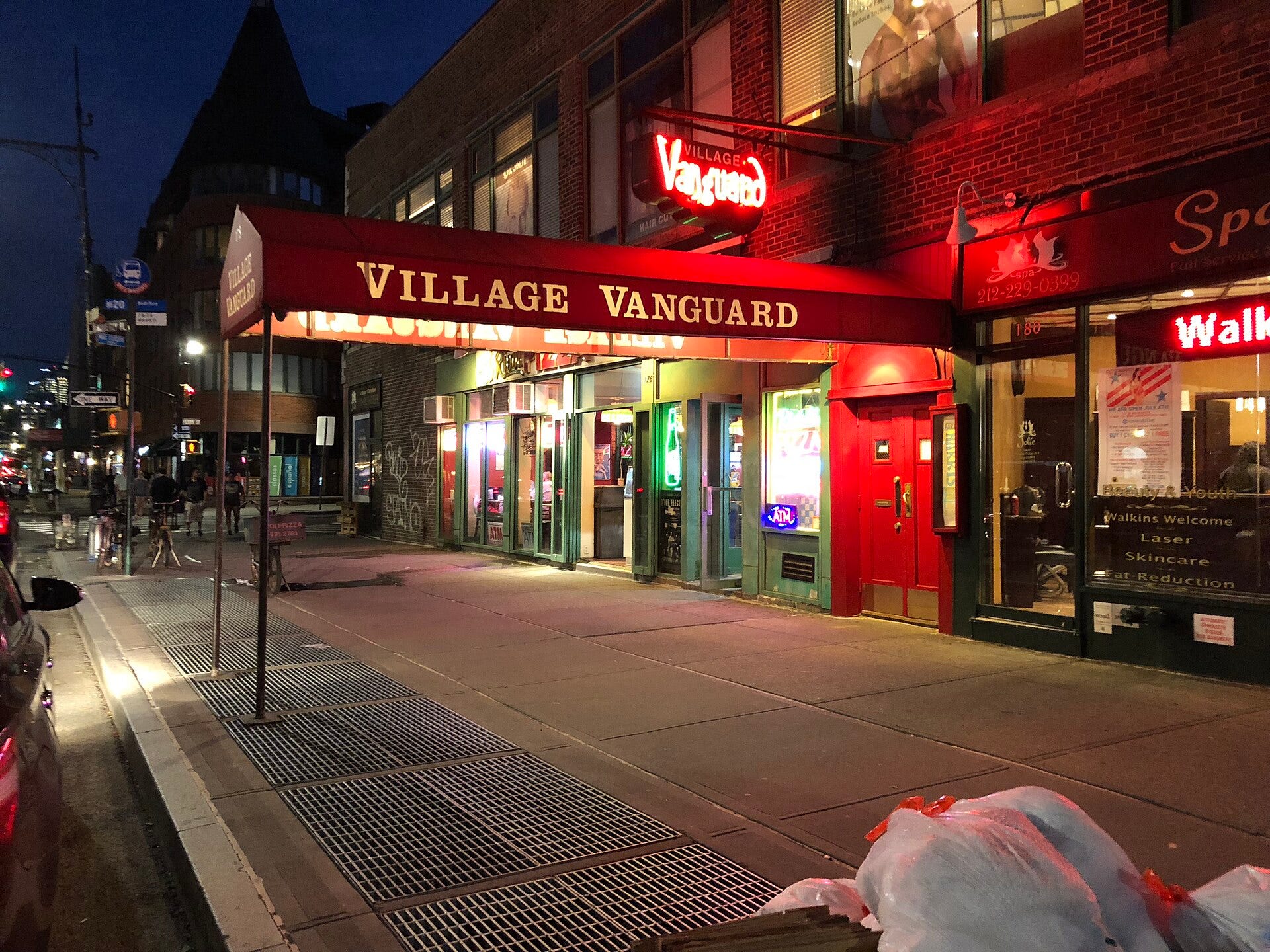
The first time must have been around 1973. Dates in that era are less like calendar facts and more like weather. Early seventies. New York. The city still had its teeth out. It could gum you to death if you weren’t careful.
It had opened in 1934. In those days one could go hear Lester Young, Ben Webster, all the greatest jazz musicians for fifty cents at the door, or something like that. Then another genration… Dexter Gordon, John Coltrane. Then came the people I saw… Horace Silver, Thelonious Monk, Gerry Mulligan, the Modern Jazz Quartet, Sonny Rollins, Charlie Mingus, Bill Evans Rahsaan Roland Kirk, Stan Getz, Hank Jones, Thad Jones and Mel Lewis.
How many times I walked down those stairs. Said hello to Max Gordon the owner.
I’d been exposed to Coltrane in 1972, which sounds tidy when you write it down, but it wasn’t tidy. Nothing about that music arrives politely. It doesn’t knock. It comes through the wall.
By then I’d already left home as a teenager, supposedly in pursuit of musical excellence. Exertinence. Existence. Some noble, poster-ready story about art. But no. I left to survive.
Home was violent. Not metaphorically. Not in the way people say their parents were “strict” or “intense.” Violent. Unsafe, physically and emotionally. The kind of place where you learn to listen for footsteps like other kids listen for the ice cream truck. The kind of place where running becomes strategy.
And music, for me, was safety. Not comfort. Safety. As in: a room you can lock from the inside.
Coltrane’s Live at the Village Vanguard was the jazz record I played over and over and over again until the grooves didn’t feel like grooves anymore but like a set of instructions. It represented another universe. One that was safe and free and required mastery. It didn’t care what kind of family you came from. It didn’t ask for your biography. It asked if you could play.
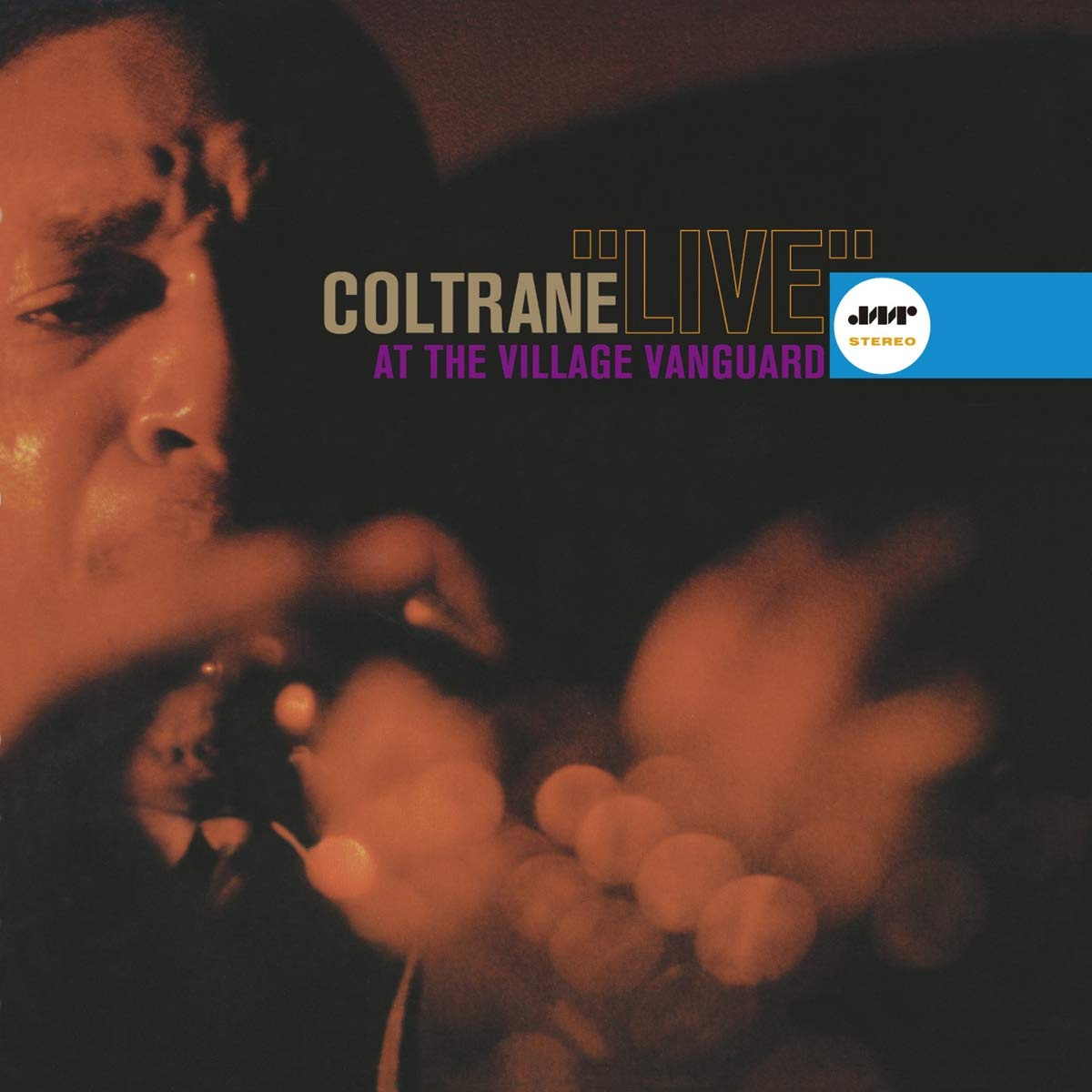
I wanted that mastery. I wanted to navigate that universe with those musicians. I wanted to be inside it, not just staring through the glass like a white kid outside a candy store with no money and too much hunger.
So years after Coltrane died, I descended those stairs at the Vanguard, past the brick and the neon and the hush that isn’t really a hush, it’s anticipation wearing a trench coat. Max at the door.
And I probably went back a hundred times or more over my life. If Elvin Jones was playing there, I went. If McCoy Tyner was playing there, I went. If some configuration of giants and near-giants and future giants was set up in that basement like a ritual, I went.
I went for the weekly regulars too, the ones who made the place feel less like an event and more like a home base for the obsessed. Thad and Mel on Mondays. I went for Liebman and Grossman. I went for the iterations, the evolutions, the nights that were supposed to be “good” and the nights that were rumored to be “insane” and the nights you didn’t hear about until later when someone said, casually, like they were describing a sandwich, “Yeah, Elvin was out of his mind.”
Most often, I went for the Elvin Jones Jazz Machine, which is a name that sounds like a carnival ride until you’re in the room and it starts and you realize the ride is not designed to keep you comfortable.
But to back up, because Elvin is the center of this thing, even when the story pretends it’s about the Vanguard.
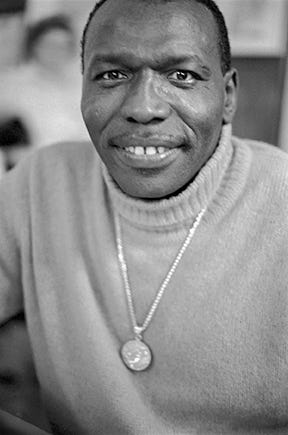
Elvin Jones is an enigma. To this day, I don’t understand him, and I mean that as praise, not complaint. Some musicians you can diagram. You can say: here’s the training, here’s the lineage, here’s the method. You can see the scaffolding.
With Elvin, you hear the cathedral and you can’t find the blueprints.
My first personal encounter with him was upstairs at Frank Ippolito’s 50th Street Percussion Center, which was a secret drum mecca for the afflicted. You didn’t go there because you wanted to be “good.” You went there because you were already ruined for normal life. You went there because drums were not an instrument, they were a condition.
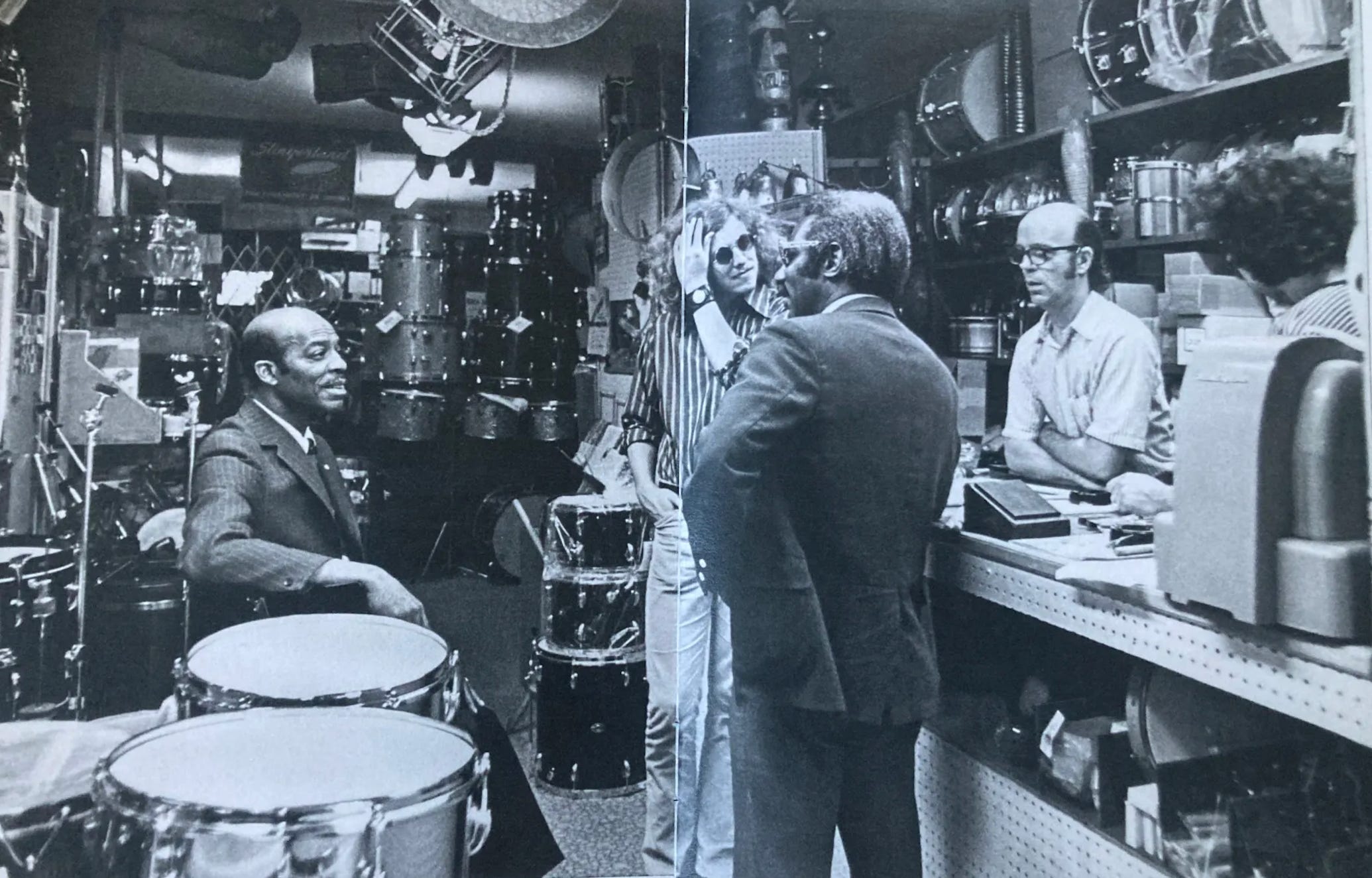
We’d go to the third-floor practice room for lessons. This was 1971, 1972. There was one main room, maybe another, but the important one was shared for teaching, like a chapel with sticks and cymbals instead of incense.
I walked up to the third floor with my teacher, Tony Williams, and we bumped into Elvin and Butch Trucks from the Allman Brothers Band.
Now, Butch Trucks I knew, at least in the way you know someone through records and radio and the general American hum. It blew my mind that he was there, crossing over, taking a lesson from Elvin Jones. The four of us stood there talking for a minute.
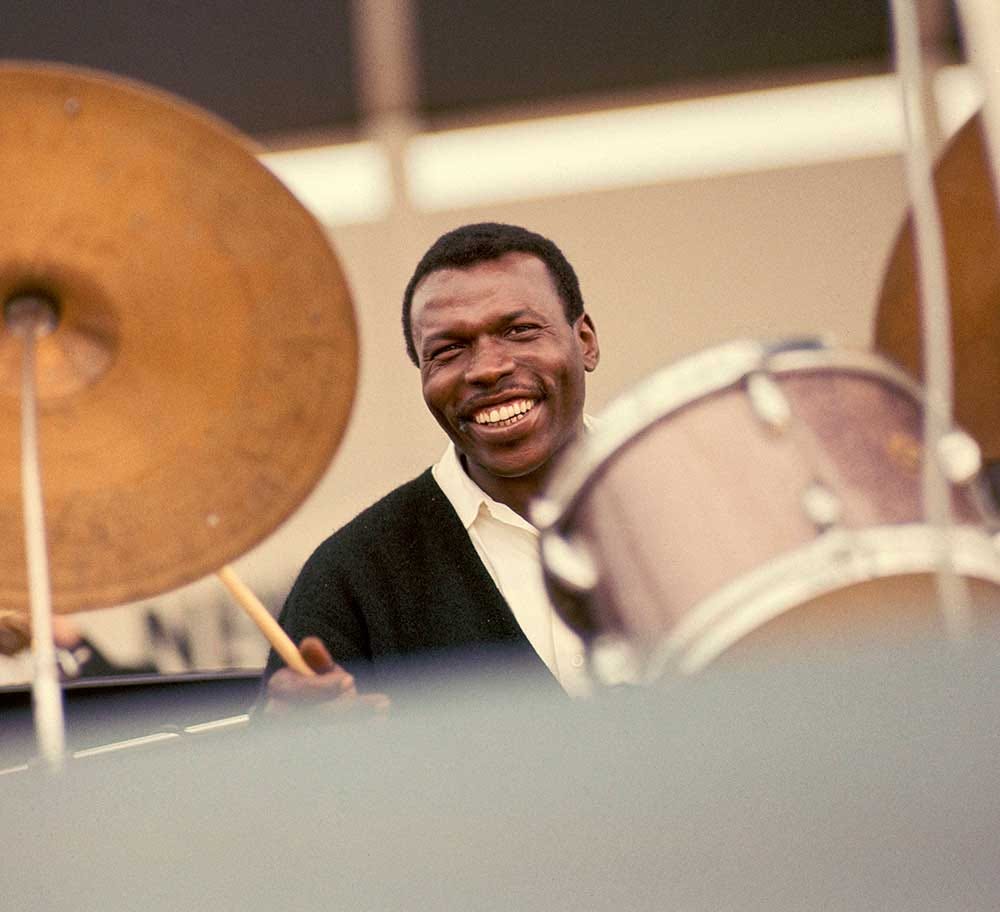
Elvin had that big grin. That grin that made him look like a man who knew a joke you were still too young to understand, but he liked you anyway.
And I remember thinking: what is this? What is Elvin doing teaching people? Is it money? Survival? Love of teaching? Obsession? A kind of generosity? Or was it just that his life was a river and this was one bend in it and he didn’t question it?
I’m not here to judge. I’m not even sure judgment applies. But Elvin Jones was a drinker.
Every time I saw him, there was a bottle under his floor tom. I saw him incoherent many times. Same with Joe Jones, unrelated, but in the same ecosystem of brilliance and wreckage. They’d be at the Percussion Center looped by day and at some club by night as long as there was a bar.
And then they would sit down and play like the laws of physics were optional.
Inventive. Unique. Swinging. Solid. Spectacular.
Later it got to be a joke, like they were cartoon characters, except cartoons don’t make you cry at two in the morning because a ride cymbal pattern suddenly sounds like forgiveness.
We had this little group of friends who were together every day up in my loft on 30th Street. Kenny Kirkland. Ronny Barrage. Marvin Horn. Michael Brecker, Jerry Wortman. Paul Kimbarow. A small society of lunatics and believers.
Marvin, at the time was a member of Elvin’s group The Jazz Machine. Ronny would eventually get the gig with McCoy Tyner. Marvin was a guitarist. Ronny was a drummer. So we would go see the Jazz Machine and McCoy pretty regularly.
I’d been going to see Elvin for years before, back when it was the Liebman-Grossman version, which was its own kind of weather system.
One of our good friends in the crowd was Adam Nussbaum, who we affectionately called Little Elvin because he was completely obsessed with Elvin’s playing and seemed to be the only person we knew who had actually unlocked what the hell Elvin was doing. Adam got the gig with Dave Liebman, whose loft was around the corner, and we’d go by and play.
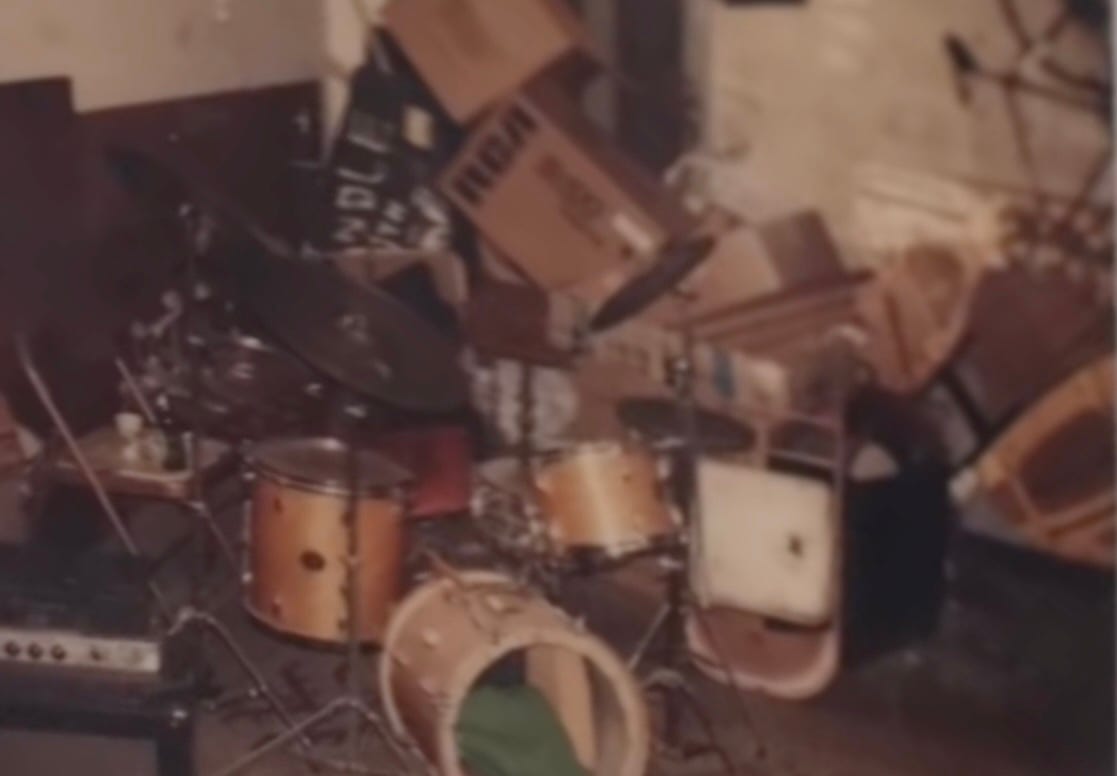
The drum set at Liebman’s place was a small blonde Gretsch kit that was rumored to have belonged to Elvin. Liebman wound up with it, then sold it to Jerry, my roommate, who lent it to me, and I wound up losing the floor tom, because of course I did.
The floor tom got stolen out of my car in front of the Bitter End or maybe it was Preacher’s. I was doing a gig and left it in the car. And now somewhere in New York there is a floor tom living its best life, probably being used as a cocktail table by someone who thinks jazz is a font.
Anyway.
When Marvin was in the band, it was someone’s idea, I believe Keiko’s, Elvin’s wife and manager and roadie and general force of nature, to have the band wear matching T-shirts that said ELVIN JONES JAZZ MACHINE. As if anyone needed reminding.
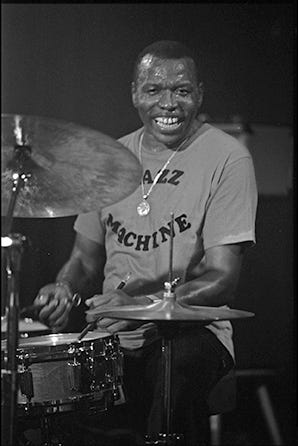
Amazingly, when she had the shirts made and she said “Marvin,” for Marvin Horn, it came out as “Mabin” because of her Japanese accent. His shirt actually said Mabin! So for years after that Marvin was renamed “May-bin”among our crowd. Teenagers are relentless and unforgiving. Also, we were jazz teenagers, which is like regular teenagers but with more opinions and fewer social skills.
The Records:
There are several records Elvin is on that are central to my being.
Speak No Evil.
Wayne Shorter, Elvin Jones, Ron Carter, Herbie Hancock, Freddie Hubbard.
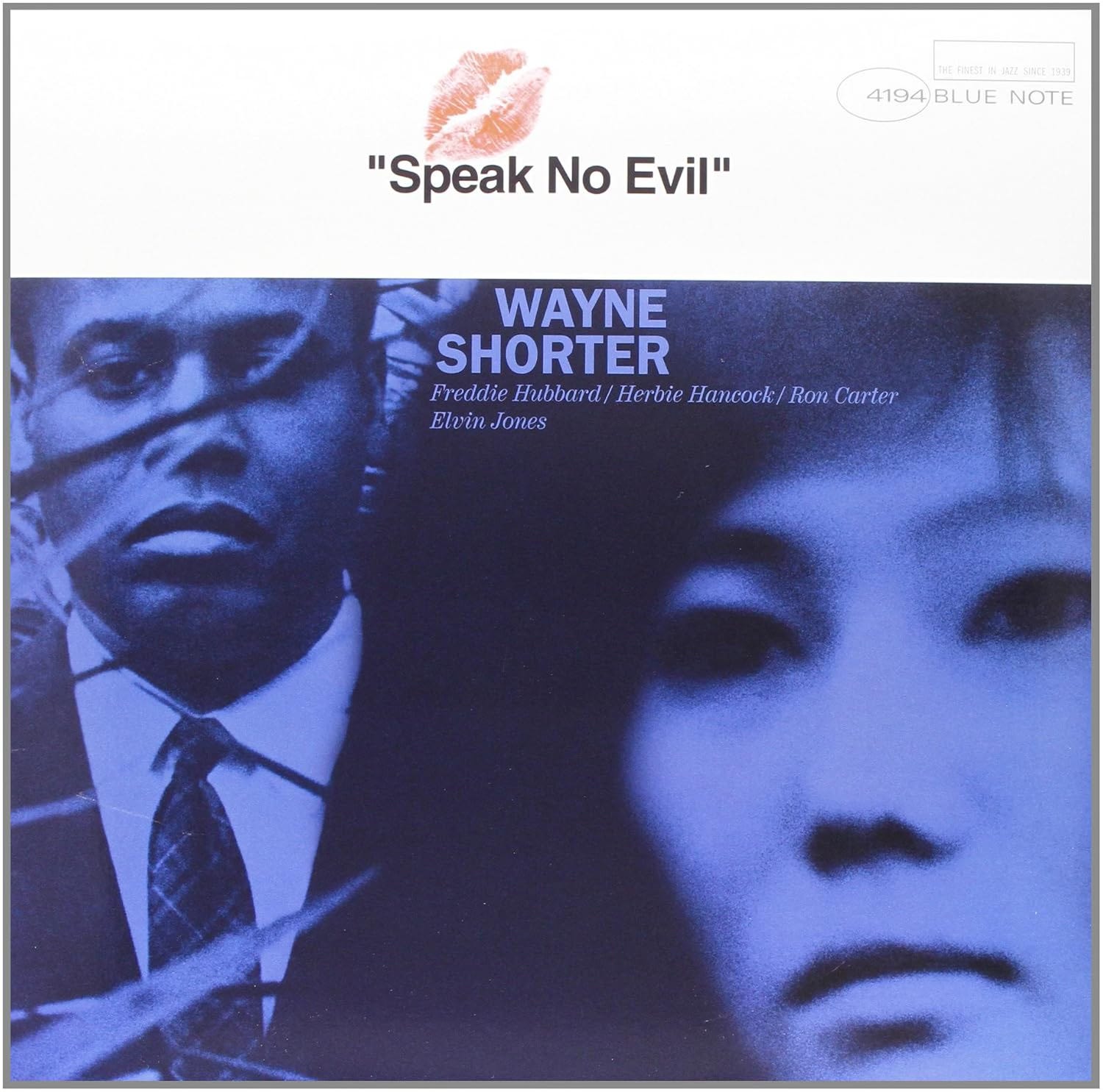
That record wasn’t just on rotation at the loft. It was the oxygen. It was how you remembered there was a world worth building yourself into.
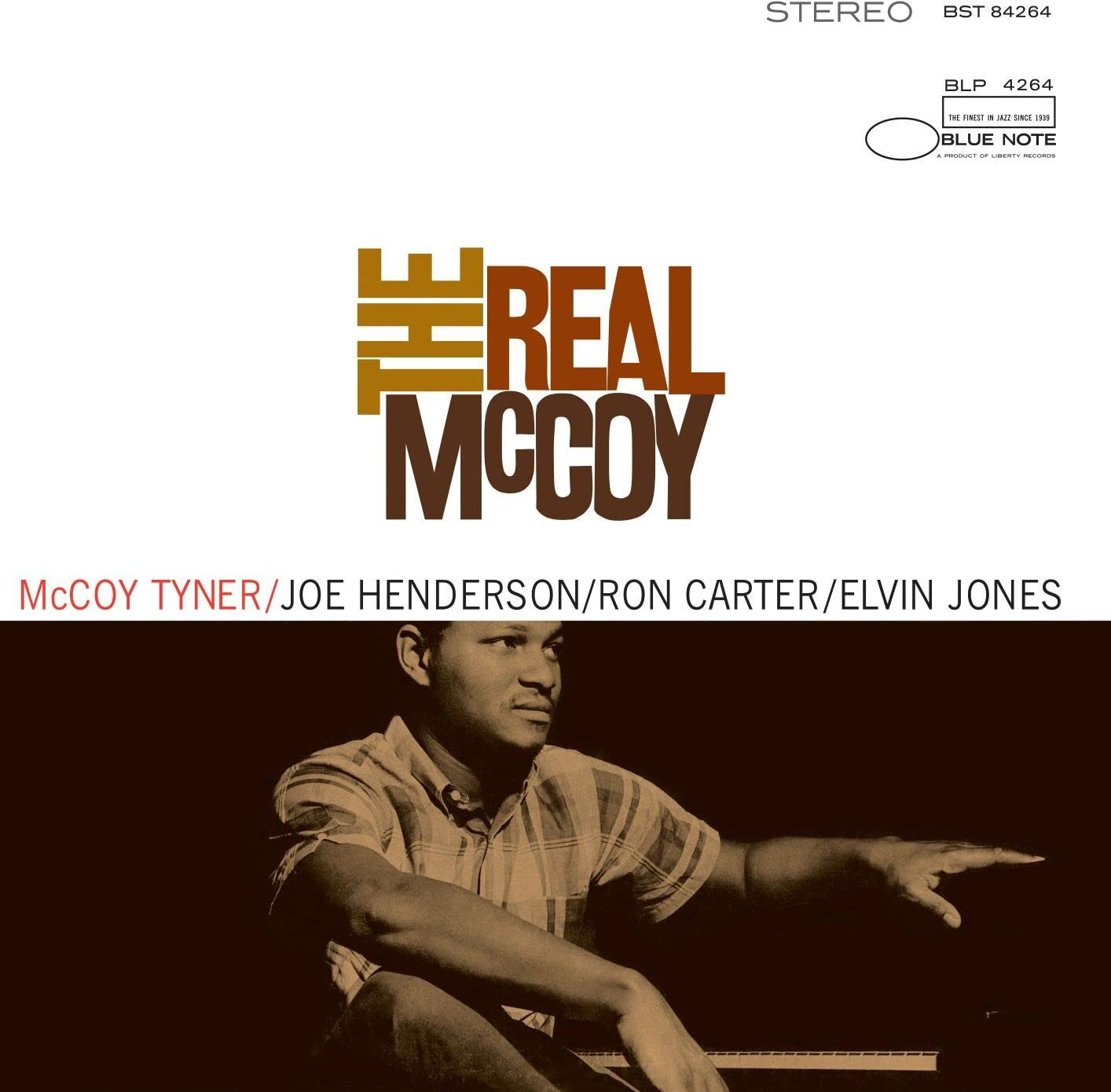
The Real McCoy. Joe Henderson involved. The whole thing like a blueprint for how to be fierce without being frantic.
And speaking of Joe Henderson, because life likes to remind you that even saints have phone bills, there was that Joe story.
Mike Brecker, a close friend, hero-worshipped Joe, as did a lot of us. There was a period where we were all cross-pollinating in the clubs, especially the Village Vanguard, a young generation and the one that preceded us, sharing oxygen and licks and ambition.
We all knew Joe to be a bit drug addled in later life.
Joe called Mike on the phone, and I forget the premise, but he went on to admonish him at length, no uncertain terms:
“You stole my shit.”
“You stole my shit.”
“Everything you play is just imitating me.”
And it wrecked Mike.
Musicians “borrow.” That’s what we call it so we can sleep at night. But Mike hadn’t stolen Joe so much as he’d studied him like scripture, and then built something else entirely. You can hear what he took from Joe Henderson. But comparing them is like saying a skyscraper is “just imitating” a brick.
Mike Brecker changed the saxophone forever. He added more than a few rungs to the ladder. His contribution was significant. But Mike was always humble, insecure and doubtful, which is part of what made him work like he was trying to outrun his own shadow.
Anyway.
Back to Elvin, the real mystery.
He spoke eloquently. His family was religious, church people. But he was also one of those jazz cats who transcended the religiosity of the previous generation. Music became the religion. The spiritual entity.
And he was a force.
But he was also, sometimes, a farce.
He seemed unschooled. He seemed like he was playing naturally, like the drums were something he’d invented that afternoon. He didn’t even have a drum set until after he got out of the army. Which is insane when you think about it, because you don’t stumble into that kind of command by accident. You don’t just trip and fall into the mountaintop.
His brothers played instruments like piano and trumpet, instruments you can’t fake without legitimate training. So how was Elvin both this untrained kid and this cosmic architect of time?
Gifted.
His speech was erudite, a little incoherent at times. A very happy drunk. A man who could talk about things in a way that made you think he’d read everything, and then he’d do something that made you wonder if he’d ever read a street sign.
There’s awe and respect in me that I can’t fully convey. And confusion too, the confusion that so many people have around him.
I keep thinking I need to talk to my friend Paul Kimbarow, who worked at the Percussion Center and knew Elvin and that whole crowd. Paul is probably the last remaining human from that scene who can say, calmly, “Here’s what was really going on,” and mean it.
There’s that movie clip of Elvin as a cowboy, Jeremiah something, where he plays drums in a scene, and it’s just bizarre enough to feel like the perfect accidental documentary. Elvin Jones in a cowboy context. America trying to understand him by putting a hat on him.
It doesn’t work.
Nothing contains him.
But his mastery puts him at the mountaintop. Absolutely.
And I still can’t figure it out.
What I do know is this:
I am one lucky motherfucker to have spent all that time walking amongst giants.
And that’s the thing about the Vanguard stairs. You go down expecting a club. You go down expecting a night out, a drink, a set, some heat, maybe a story to tell someone later if you can find anyone who cares.
But what you’re really doing, if you’re lucky, is descending into a universe where survival gets translated into sound.
A universe where pain becomes time.
A universe where you learn that mastery isn’t just technique, it’s refuge.
And every time those drums hit, every time Elvin’s ride opens up like a door, you remember: there are worlds inside the world. Some of them are safe. Some of them are free.
Some of them require everything you’ve got.
And sometimes, if you keep showing up, you get to stand in the room while the giants do what giants do, and you realize the luck isn’t just that you heard it.
The luck is that you lived long enough to keep going back down the stairs.
The last time I saw Elvin, it wasn’t underground in The Vanguard, and it wasn’t upstairs at the Percussion Center with the pilgrims and the battered practice room doors. It was daylight. It was lawns. It was Central Park.
I was playing a wedding gig at the Boathouse, which is the kind of sentence that still makes me laugh if I say it out loud. There I was in a tuxedo, hired to be part of the bring-in-the-salad background music, the sonic wallpaper for a midsummer fantasy. We were playing “Blue Bossa” or “One-Note Samba”, trying to make it pretty and innocuous, trying not to scare the bride’s aunt.
But I was with really good musicians. The best, in fact. And the problem with playing with the best is that you can’t fully fake smallness. You can try to shrink the music down to something tasteful and nonthreatening, but if the people around you are actual artists, the notes refuse to behave. The groove starts telling the truth. The harmony starts having opinions. There’s no way to hide that you’re actually making music, even when the job description is “don’t be noticed.”
And then, through the corner of my eye, I see them.
Sitting at one of the tables like it’s the most normal thing in the world: Elvin and Keiko.
Holy shit.
It was too bizarre to process in real time. Only in New York does this happen. A midsummer wedding at the Boathouse in Central Park, swans and champagne and the city pretending it doesn’t have guns and knives, and Elvin Jones is just… a guest. Like he’s there for the Viennese Buffet or the open bar or because somebody’s cousin married somebody’s niece and this is how the universe arranges itself when you’re not looking.
On the break I walked over, because of course I did. You don’t see a living hero at a salad wedding and act casual. I approached him to say hello.
He looked at me with that big, giant, open, welcoming smile, the same grin that always made him seem like the room was a party and you were invited, even if you didn’t know why.
And he said, simply:
Yeah, man. You sound great.
That was it. No lecture. No mystic pronouncement. No “you see , you gotta…” Just this generous, impossible blessing from a man who lived in the music the way the rest of us live in our own nervous systems.
And I remember standing there in a tuxedo, holding a wedding-band break-time Diet Coke, trying to reconcile the absurdity of the setting with the gravity of the moment.
And the last show I saw at The Vanguard (which is still open), about two years ago, I went with Susan Brecker to see Ravi Coltrane. We all talked very lovingly and reverently at the bar after the show. Just standing there, in my 60’s, was humbling. What had I done to deserve such good fortune?
You were there
Great times.