

Counterweight
A dream about shame, artists, and the tribe we’re rebuilding.

I had a life-saving dream.
Which is a sentence that sounds like it belongs on the back cover of a tattered paperback you discover downstairs in the used section of the Strand. But I mean it plainly.
What is it that created this dream for me, where my nature was recognized instead of dismissed?
Maybe that’s the first miracle: the dream didn’t ask me to prove myself.
Because that’s the question the exterior world keeps sliding under the door like an overdue bill.
Did it monetize?
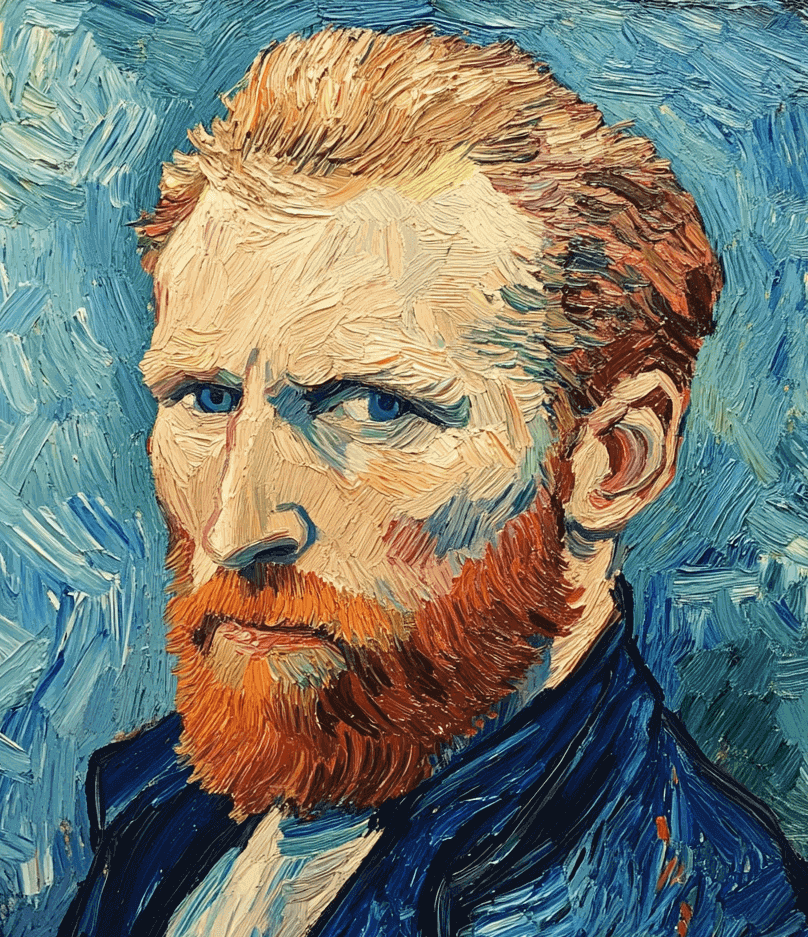
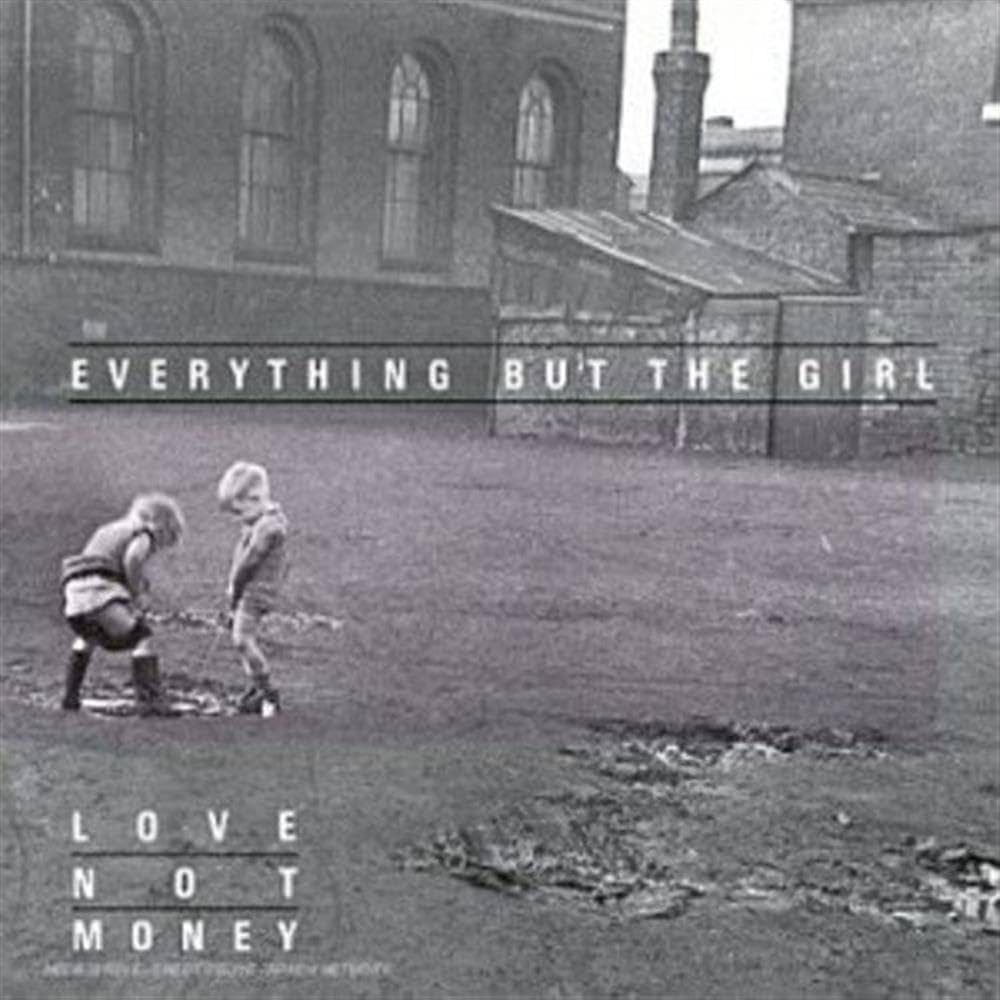
It’s amazing how quickly a culture can turn a sacred function into something you feel embarrassed about. Not because you don’t believe in it, but because you can’t stop hearing this song from the eighties in the background of your own mind.
Show me something more
Than the wolf at the door
All the begging in the cold
To keep the wolf from the fold
Show me something more
Than an honest girl turned thief or whore
Under African sun or Dublin rain
Necessities remain the same
Shame becomes distortion. Distortion becomes a story you live inside.
The story goes like this:
If it didn’t make money, it didn’t matter.
If it didn’t scale, it wasn’t real.
If you can’t point to a number, you can’t call it real work.
And if you’re an artist in a money-driven culture, you learn to apologize for your calling the way other people apologize for taking up space on a crowded sidewalk. You learn to shrink. You learn to think you never got a “job job.”
But my job has always been the same, even when I tried to pretend otherwise.
My job is to listen, translate, interpret, create.
Beauty and truth matter. I’m here to share with you; the wonder that there is something more than daily dross. This is not as an aesthetic preference, not as a cute little vibe, but as a necessity. As function. As the thing I can do the way some people can build a car manufacturing plant or run a hospital wing without flinching.
It’s not a hobby.
And I’ve lived inside the art and commerce tension for my entire life: the internal compass pointing toward beauty and truth, the external world pointing toward financial victory, the will to power, the scoreboard. When those two value systems collide, the artist is trained to draw one conclusion:
I must have failed.
But that conclusion only works if money is the correct measurement.
And it is not.
So last night, I had a dream that corrected a distortion artists live with.
I’ve been part of music scenes, creative circles, recovery rooms, downtown New York culture. Whole ecosystems where the weird-folk and the sensitives and the broken-yet-building people clustered together and made meaning out of the wreckage. Those ecosystems are largely gone now. The City got priced out. People got exhausted. People got older. Or people stayed the same age in their own mythologies and burned out in real time.
Creative people are never meant to live in isolation. We are not solitary farm equipment. We are not designed to rust quietly in a barn. We’re designed to be in proximity, in conversation, in friction, in communion. Shakespeare went to London because the center of gravity was there. The stage was there. The audience was there. The fever of minds was there. You go where the work can breathe.
And in my dream, the work was breathing.
I dreamed I was visiting a tribe that understood my role and supported it. Not with a pat on the head, not with the gentle condescension reserved for people who “follow their passion,” but with a clear-eyed respect and recognition: this is what you do, this is why we absolutely need you here, this is what you’re for.
In the dream, a woman was speaking. As she spoke, I turned her speech into symbolic line art on a large sheet of glass.
Glass.
Not paper you can crumple up. Not a little screen you can swipe on. A single pane of glass. The thing you can see through. The thing that lets light through and makes things legible. I was drawing on it as if I were translating her words. As if my hands were doing what my mind has always done: finding patterns, extracting meaning, turning the invisible into something you can look at.
And it hit me, even inside the dream, that this was medicine. It was addressing a wound.
Because somewhere along the way I became ashamed of being a Creative Artist.
Which is absurd, if you list the evidence like a prosecutor.
I’ve raised good kids.
I’ve made real art. Records, paintings, stories, essays.
I’ve traveled the world making music.
I’ve stayed alive through things that destroy most people.
Everything contradicts the shame narrative. Yet shame doesn’t care about evidence. Shame is not a courtroom; it’s a haunted house. A room full of mirrors. You can redecorate all you want, but the footsteps still come at night and what you see is distorted.
The dream didn’t cure me with an inspirational slogan. It didn’t hand me a laminated affirmation. It did something smarter.
Deep in sleep, it showed me a world where I simply did what I do.
I created something.
I shared it.
And you understood it.
Not money.
Not applause.
Not the desperate scramble to justify your existence in a culture that confuses price with value.
Understanding.
Recognition.
Community.
And I am rebuilding a community right here, right now as I write. This isn’t poetic. It’s literal. Each honest sentence is a plank. Each exchange is a nail. Each person who reads and says, I know this feeling, is another raw beam placed into position. You don’t rebuild an ecosystem by wishing. You rebuild it by showing up with your strange little gift and refusing to call it small.
And I’m trying, deliberately, to imagine what it’s like when my shame voice is removed.
A world where I don’t brace for the monetization question.
A world where I don’t flinch when I say what I am.
A world where I don’t mistake my nature for a flaw.
I see the same pattern-recognition mind in my fifteen-year-old son. He sees ten times more in a movie than others do. Not in a snobbish way, not as a performance, but as if he can’t help noticing what’s there: the camera’s quiet confession, the subtext hiding in the edit, the meaning shimmering behind the dialogue. He’s desperate to share it with people, the way I’ve always wanted to share what I see. I recognize myself in him. And that recognition arrives with both tenderness and terror, because I want to protect him from the shame that tried to colonize me.
Some people are built for acquisition.
Some are built for structure.
Some are built for stability.
Artists are built for expression.
Which does not mean artists are delicate. Artists metabolize experience into meaning, then offer it back. Since the caves of Lascaux, artists take the raw materials of living and do something alchemical with them. They make a thing that didn’t exist before, and then the right person looks at it and goes—
Ahhhh.
That sound is not trivial. That sound is the wonder of the human spirit recognizing itself.
Paul McCartney once said he’s never worked because he’s always “played” music. And there’s something in that word play that our culture misreads on purpose. Play sounds optional. Play sounds childish. Play sounds like you should be done with it by the time you have to turn in your taxes.
But the creative person makes believe.
Make.
Believe.
Not “pretend” as in lie. Make-believe as in manufacture a bridge between the inner world and the shared world... for others. Make believe as in: here, look at this, this is what I see, and if you see it too you’ll feel less alone, and maybe you’ll remember what you forgot you knew. You too will believe.
And by this truly spiritual pursuit they are reconnected and for a moment, made whole.
So maybe my interpretation of the world as built around the will to power and financial victory is shallow and incomplete. Maybe it’s a story I picked up as a child, or as a young teen on my own literally trying to survive, mistaking the rules of emergency for the rules of life. When you’re trying to stay alive, you learn to worship whatever looks like safety. Money can look like safety. Approval can look like safety. Predictability can look like safety.
But my identity is built around truth and beauty.
And when truth and beauty collide with the marketplace, the marketplace does what it always does: it asks for a number. It asks for proof.
This dream refused that.
It said: you are necessary. Without a calculation or a spreadsheet.
It said: your function is real even if it doesn’t scale.
It said: you are not a failed capitalist; you are a working artist.
In the dream I was translating someone’s speech into line art on glass. In waking life, I’m doing the same thing with experience. With memory. With grief. With joy. With the feeling of living in a culture that keeps trying to turn sacred work into a side hustle.
And here’s the truth I woke up holding like a warm stone:
We need our dreams more than anything. Especially now.
Not because dreams are escapism, but because dreams are counterweights. They correct the distortions we’re forced to inhale all day. They return us to our actual shape.
Money is one measurement. Eh?
It is not the measurement—despite what our orange leader believes.
If you are an artist and you have been made to feel ashamed, consider this your reminder, delivered without monetization and without apology:
Your work is not dross.
Your nature is not a flaw.
Your value is not up for auction.
Create something.
Share it.
Let the right people understand it.
That understanding is the tribe.
Dreams guide us to build that tribe.
The tribe is the counterweight.
I think most artists from a very early age get distorted messages about their interest in being involved in the arts. On one side, a parent can openly be proud about a son or daughter who has obvious artistic talent and drive. On the other side, the financial protectionism most parents instill in their kids include the message of, "no dear, you dont want to choose an artistic vocation. Sure, this prestigious school offered you a scholarship. We're very proud of you for that, but go to college and get at least an undergraduate degree first." Somehow no degree of artistic acumen that even other real world class artists can objectify will hold water with parents who only believe in a "real job job" for their own children. Maybe even moreso in a community of corporate financial shakers and movers. At least, this has been a big part of my journey. On the other hand, there are also stories of a proud parent with meager means from say a scant section of Brooklyn saying with pride, "my son the violinist- he's gonna really MAKE it in this world! I'm SO proud of him!". But that's more of a rarity. In the end, maybe some concerned parents are right- have a career to fall back on. Maybe their kid who loves the art really doesn't have what it takes to survive in the art world. Nobidy knows for sure, but every kid deserves the right to spread his/her wings and see for him/herself. Some parental advice proves to be great, some other advice is not so good or appropriate. Either way, if you can live without useless old tapes running through your head, you're on to something of immense value. This old art career chioce tape can occasionally rear it's ugly head even in my 73 year old brain if I'm not really paying attention. But then I laugh: Oops... too late! Oh well... I coulda had a V8, but I've found I really loved this grapefruit juice a whole lot instead all these years. It's all good.
***And dont get me started on Agent Orange......... Any "advise" he comes up with for anyone will only be a smokescreen for something that will yeild a fortune for him- despite you. At least most parents have impeccable motives that are guided by love even whether their advice proves good or misguided. Keep talking to your kids. They will make sense out of all of this eventually anyway. But just love and support is really what they need most of all- every step of the way.