

An Embarassing Tale
I once walked past God in a studio, and I thought he was just adjusting his hi-hat

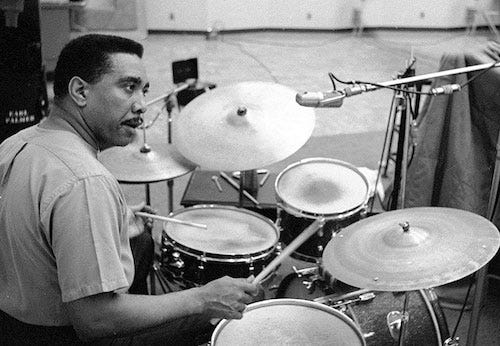
I don’t know how to tell this story. Maybe because it’s still happening. Maybe because it’s never stopped.
When I hear the name Earl Palmer, something in me buckles. Not dramatically. More like a soft collapse—like realizing you forgot your own anniversary. It’s shame, yes. But it’s more than that. It’s grief. Because when I met him, I didn’t know who he was. And for someone who built their life on rhythm, that kind of oversight feels like blasphemy.
My childhood was not the kind you tell at dinner parties. It was sanitized from the outside—white suburbia, middle-class lawn, good schools—but inside, it was bruised and burning. My father carried the weight of generations of dysfunction and handed it off like a baton in a doomed relay. He was only eighteen when I was born. Too young to know himself, let alone raise someone else. Our house throbbed with unresolved anger, forced charm, and the permanent tension of unspoken truths and violence.
He had a 1968 Corvette Stingray and slicked-back hair like Al Pacino in The Godfather. But underneath was a man who didn’t know how to love without control. And I didn’t know how to breathe unless I was behind a drum kit, submersed in music.
Music wasn’t a choice. It was my exit strategy.
The first songs I could play all the way through were “The Lonely Bull” and “Guantanamera.” The Franklin Elementary talent show. George Vosburgh and Tommy Federico on trumpet and cornet respectively, and me just trying to keep time. Fern Bloom and Stacey Kaufman screaming “Oh GARY!” from the bleachers like I was Ringo Starr in corduroys. Mortifying.
I didn’t know then that I was echoing the work of two titans— Hal Blaine and Earl Palmer. I just knew it felt better than being in my body.
And then came Hendrix.
By the time I hit puberty, my basement had become my sanctuary. Posters of Jimi on the wall. Black light glowing like stained glass. With candles lit, imagining I was in some cosmic nightclub, I played “Voodoo Child,” on loop like it was a sacred chant. Hendrix wasn’t just a guitarist. He was liberation. He made distortion musical and it sounded like truth. He gave chaos form. I’d close my eyes and disappear into the whirl—his wah-wah pedal whispering a freedom I hadn’t yet lived but fully believed in.
Then came Coltrane.
I was 14. My neighbor played me “A Love Supreme,” and I didn’t understand it—I felt it. It was like my body had been tuned wrong and he was setting it straight. Coltrane didn’t play notes. He played longing, ascension, rupture. It was church. It was bliss and gratitude. It was the first time I heard someone reply to God with both hands and somehow find peace.
From that point on, with the exception of Stevie and Stax, pop was dead to me. I was a jazz disciple. And my messiah was Tony Williams.
Tony wasn’t just a drummer—he was an interstellar event. He joined Miles Davis at 17 and transformed the drum set into a poem, a whisper, an emotion, a scream. My local drum teacher saw my promise, had heard at The Professional Percussion Center (then on 50th and 8th in Manhattan) that Tony was teaching privately—and in an act of humility I am still grateful for, insisted I seek him out. I thought he was joking. But he wasn’t. And then, miraculously, neither was Tony.
Tony Williams took me under his wing.
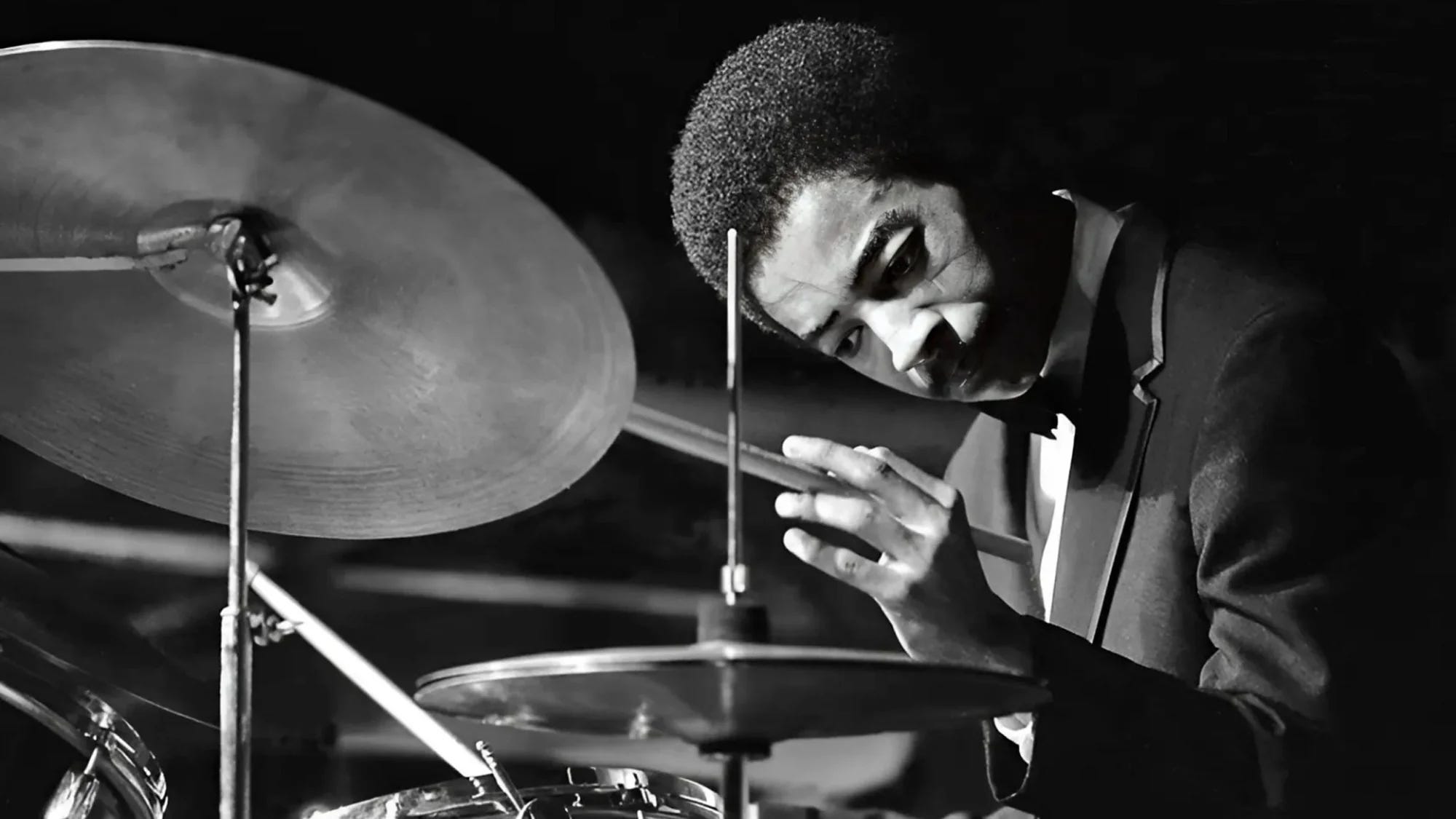
I didn’t understand what had happened. Still don’t, really. He shouldn’t have had time for me. I was just a white kid with some feel and a desperate hunger. But he saw something. Or maybe he saw through something.
Tony didn’t just teach me how to play. He taught me how to exist. How to speak the truth through rhythm. How to carry pain in tempo. How to use the instrument not just as a craft, but as a vessel.
From there, I played everything—jazz clubs, Italian parades, 80s cover band bar gigs. I prided myself on versatility, but inside, I was always chasing that same feeling: Hendrix’s chaos, Coltrane’s ache, Tony’s authority.
And then—LA. Mid ‘90s. Dr. John—Mac to those who knew him—was cutting a record with BB King. The drummer was Earl Palmer and he could only do the first day, so Mac called me to fill in. I nodded like I knew who Earl Palmer was. I didn’t.
Ocean Way Studios, 6000 Sunset, Room Three. BB and I hit it off immediately. We talked in the lounge, just me and him for what seemed like an hour. That’s the magic he had. He put people at ease and made people feel seen.
I wandered into the live room. Drab space. Blanket over the piano. Drum kit set up against the wall. An older Black man adjusting the hi-hat. He looked at me—blank, neutral, unreadable. And I flinched.
I hate that I did.
Not because of race. Because of everything that came before race. The history I inherited. The learned fear. The thousand little lies baked into my upbringing about who belongs and who doesn’t. It kicked in before I could stop it.
I gave him a nod. Walked out. Didn’t say a word.
That was Earl Palmer.
I wouldn’t realize it until years later. But that man—quiet, still, fixing the hi-hat—he had laid the foundation for everything. The groove behind Little Richard, Sam Cooke, Ray Charles, Sinatra, The Wrecking Crew. He had even played on The Lonely Bull, that first song I ever performed in front of people. So yeah. That’s why the name Earl Palmer makes my stomach flip. I once walked past God in a studio, and I thought he was just adjusting his hi-hat.
And the studio? Western Studio Three. The Beach Boys’ “Pet Sounds” room. The inner sanctum where Brian Wilson went mad with beauty.
I was in a cathedral surrounded by ghosts. And I didn’t even know it.
That’s what trauma does. It teaches you to look away. To avoid eye contact with grace. To survive instead of inhabit.
But I’m learning.
Now, every time I sit behind the kit, I carry them with me—Hendrix, Coltrane, Tony, Earl. And yes, even my father. I can’t escape him. But I can play him out. I can lay him down in rhythm and let him rest.
I haven’t been behind the kit much these past few years. I can’t quite say why—things just started filling the space where drumming used to live. The love hasn’t left. Things just went quiet. I do hope the inspiration will spark and the opportunities knock. For people like me, playing drums isn’t a decision. It’s a return. Every time we play.
And sometimes the only road home is the music.
Breathtaking. Thanks Jeff!
http://focusedaudio.com/video/3095516
Earl Palmer